"Re-Enter...Stage Left" - "Closest to the Heart" - "Heavy Lies the Crown"
By Joe Bosso and Ryan Reed, Guitar World Volume 47, No. 7, July 2026, transcribed by John Patuto
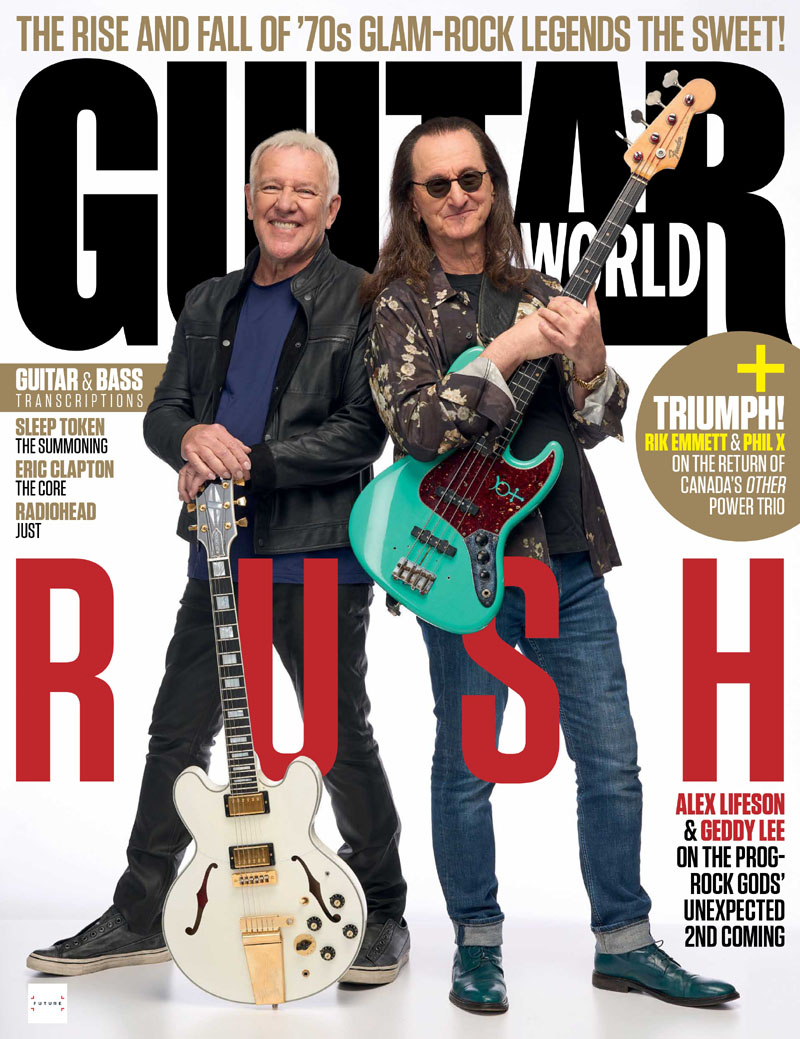
The Return of Rush: Eleven years after their last tour - and six years after the tragic death of drummer/lyricist Neil Peart - Geddy Lee and Alex Lifeson give us the inside story on their truly unexpected return to the, um, limelight. We also check in with Crown Lands’ Kevin Comeau and share our thoughts on Lifeson’s greatest Rush guitar moments.
Re-Enter...Stage Left
By Joe Bosso
So, guys, anything new? Here at Guitar World, we believe in hitting artists with the hard questions first.
"Not much at all," Geddy Lee deadpans. The bassist is speaking via Zoom from his home studio, a wall of basses behind him. "I've just been playing a lot of cards with Al, trying to win some money off him."
"He always does," says Alex Lifeson, joining in on Zoom from his own home music sanctuary. "He's vicious at Go Fish."
While we're on the subject of games, suffice to say that nobody - including, for the longest time, Lee and Lifeson - had "Rush going on tour in 2026" on their bingo cards, and it wasn't until the spring of last year when the idea started to look like a distinct possibility. Even after the two had finally come to a decision that yes, this was going to be a thing, they kept word from leaking out for months.
"Nobody knew," Lee says emphatically. "I didn't even tell my kids."
"In this day and age, it's so difficult to keep a secret," Lifeson says. "We did our best to keep it quiet, and we were pretty successful, I think."
The announcement was made almost casually, during a private event for the Rock and Roll Hall of Fame in Cleveland, last October, when, responding to an intentionally placed "fan" question asking if the band would ever tour again, Lee answered, "I kind of think we should tour next year."
Initially, the tour, dubbed Fifty Something, was a relatively short run of seven major cities, but following near-instantaneous sellouts, more cities were added, and then more, and as it now stands, the tour will encompass North America, South America and Europe, 86 concerts in all, and won't wrap until April 2027 in Helsinki, Finland.
"It was very surprising," Lifeson says of the reaction from fans.
"We knew there were fans that wanted us to come back," Lee says. "We'd get messages from fans all the time and they want to see Al and me playing together again in whatever form we had chosen. We're very fortunate we have such a loyal fan base, but I don't think Al or I or anyone associated with us expected the overwhelming response to the very first announcement. It's very nice, very gratifying."
Lee admits to feelings of frustration following the conclusion of Rush's last tour, R40, in 2015. In his view, the band was playing at peak form, and both he and Lifeson wanted to keep going. Drummer Neil Peart, however, had other ideas about how he wanted to live the rest of his life. "He was so happy being a full-time dad," Lee says, "and his body just said to him, 'That's enough as a touring musician. I can't do it anymore.'"
Over the next few months, Lee and Lifeson accepted Peart's decision. "That's life - no hard feelings." Lee says. "The man certainly earned a break from the madding crowd."
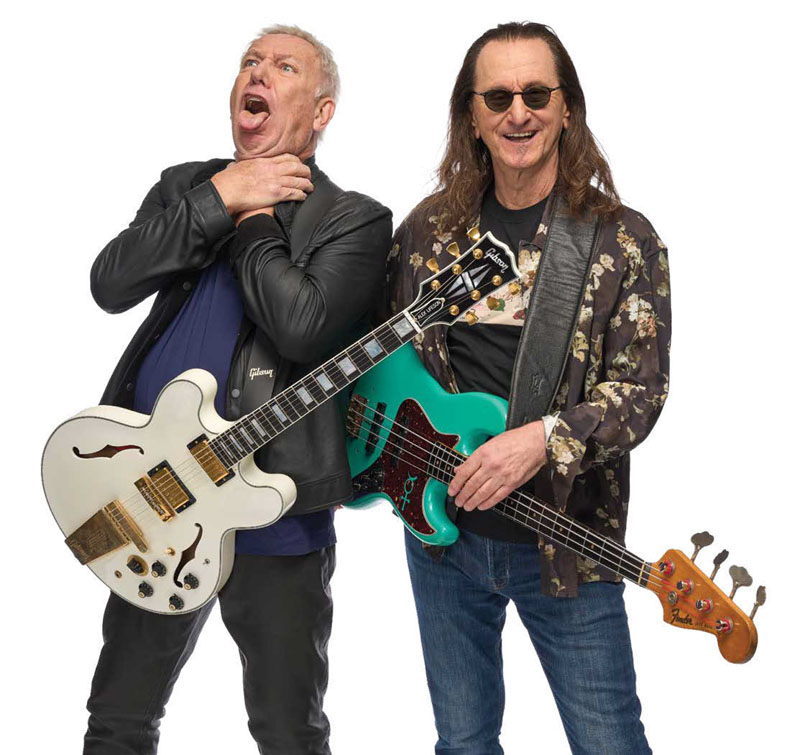
Following Peart's tragic death in 2020 from glioblastoma, Lee and Lifeson gradually occupied themselves with various activities. Lee, who already published his first book, Geddy Lee's Big Beautiful Book of Bass in 2018, cranked out two more: 2023's My Effin' Life: From Holocaust Roots to Rock and Roll Stardom and 72 Stories: From the Baseball Collection of Geddy Lee. "Writing my first book was very gratifying," he says. "It taught me that instead of banging out notes, I can bang out words. It sent me down a different path."
Lifeson posted a couple of solo instrumental tracks, "Kabul Blues" and "Spy House," on his website before forming an alt-rock band called Envy of None with bassist Andy Curran, guitarist Alfio Annibalini and lead singer Maiah Wynne. The group issued a self-titled debut in 2022 and a follow-up, 2025's Stygian Wavz, but played no live shows. "I really didn't have any interest in going back on the road," Lifeson says. "I felt like I was really done with that."
The former bandmates reunited on stage a few times in 2022, first with Primus to celebrate South Park's 25th anniversary (the show's co-creator, Matt Stone, played drums on "Closer to the Heart"), and they performed mini-sets of Rush classics at a pair of tribute concerts for the late Foo Fighters drummer Taylor Hawkins, during which they were backed by a number of drummers: Dave Grohl, Tool's Danny Carey, Red Hot Chili Peppers' Chad Smith and former David Bowie sticksman Omar Hakim. "The Taylor Hawkins tribute shows were pivotal for a lot of reasons," Lee says. "Obviously, we got a chance to pay tribute to Taylor, but also we got a chance in our own way to pay tribute to Neil, which was long overdue. To play our songs again with some other brilliant musicians, it showed us that our music is still alive."
Riding high from those shows, the two briefly considered taking things a step further and playing together in an official capacity. "But it didn't work out," Lee says. "No sense dwelling on it, just move on with your life." For Lifeson, that meant tending to his health. Stomach surgery to correct a hiatal hernia resulted in gastroparesis, a chronic condition in which the muscles in the stomach don't move food as they should for it to be digested. The guitarist visited a wellness clinic in Austria and learned to manage the condition through strict lifestyle changes (alcohol, smoking, gluten, lactose and junk food are out). Once he was back home, he would get together with Lee, just like always, and soon they began jamming. Then they began jamming on Rush songs, just two old friends having a blast.
Only it wasn't that simple. This wasn't just two old friends having a blast. It was something more than that... but what? Could they really tour once again as Rush? Should they? Warming up to the idea took some time, especially for Lifeson, who had previously stated that Rush's touring days were over. And the biggest question of all was, if they did play live again, who would sit in that drum seat? As Lee says, "How do you ask someone to replace a guy who's irreplaceable?"
Through his bass tech, John "Scully" McIntosh, Lee was tipped off about Anika Nilles, a German composer, producer and music educator, and as it turns out, a virtuoso drummer (her resume includes a 2022 tour with Jeff Beck). As Lee recalls, "We did a Zoom call together and said, 'Look, we're thinking of going on the road, and obviously we need a drummer. Would you be interested in playing some Rush songs with us?' That's really all we asked. She was totally game for it and said, 'That sounds great.' So she hopped on a plane and played with us for a week, and it was on the last day Alex and I looked at each other and went, 'Wow, I think we have a drummer... Now what the fuck do we do?'"
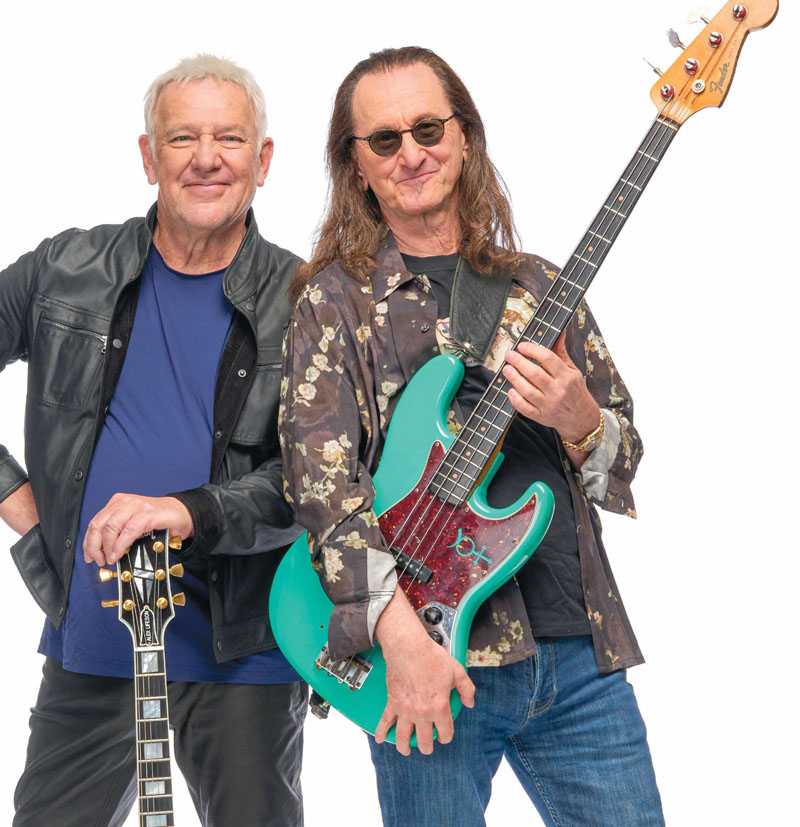
When was it exactly when you two started playing Rush songs together again?
GEDDY LEE: I would say it was in late 2024. I had just finished my third book, and I was sitting down here looking at all these bass guitars, and they were making me feel very, very guilty. So I started getting my fingers back in shape - and they were really out of shape. I came down every day and played, and I was having dinner with Al one night and I told him, "Yeah, I'm getting my fingers back in shape. I've been writing a bit of lyrics and stuff. Maybe we should jam." We always saw each other anyway every couple of weeks for dinner or drinks or something.
Al came over and we just started jamming and having fun the way we always do after we drink too much coffee. [Laughs] We're having a laugh. Then Al, I think, or one of us suggested, "Let's play a Rush song for fun and see if we can remember it without doing any homework." Of course, we could only remember parts of them. That's kind of how it started.
Aside from Rush songs, what else were you jamming?
LEE: We were just jamming, making shit up. That's what jamming is.
When two guys from Rush get together to play Rush songs, what do they play?
ALEX LIFESON: There are only like a thousand songs to choose from. We tried to get the easiest ones -
LEE: There are no easiest ones. [Laughs]
Was it just the two of you playing on your own, or did you have any sort of rhythm loop for accompaniment?
LEE: It was just the two of us. Sometimes we'd pull up the song and play along with it just to see - "What the fuck does that sound like?" That would help you remember all the things you forgot. I think Al remembers "Freewill" being the first song we tried.
LIFESON: Sure it was, yeah.
LEE: Which for a bass player is not a walk in the park. That was interesting to see my fingers tell me to fuck off. But it was fun. We ended up really laughing. And when we walked away from that goofy session, not only had we put some interesting jams down on tape, which I don't know what'll ever happen with them or they'll remain in the bin, but we walked away with this smile. Playing our songs was so much fun.
The next time we got together to jam, we started challenging each other - "Can you remember this one?" Then we would flail through it. After enough of that, we started getting this sheepish grin at the end of our sessions. It was like, "What are we doing here? Are we doing something? Are we quietly tricking each other into going back on the road?" But that was still a ways away before we could agree to that.
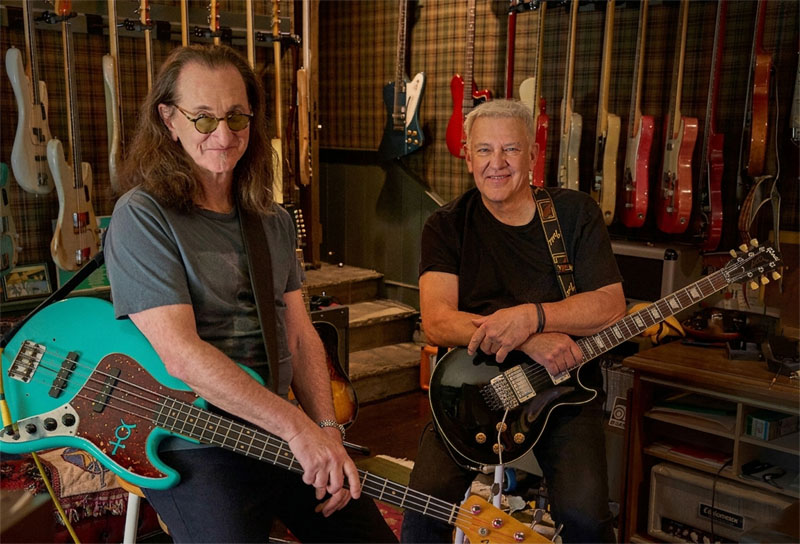
What was that moment like when one of you finally said it out loud? Who was the first to say it?
LEE: I don't know how that went. In the past, it was usually me who would say, "Hey, Al, do you want to do some shows? Do you want to think about this?" But I was a bit sheepish to do that because we've already been down that road and it didn't work out after the tribute shows for Taylor. We went down that road a little bit, but Al wasn't into it for a lot of reasons. I don't know who... I think we both just kind of gravitated to looking at each other saying, "This is kind of fun."
LIFESON: I remember Ged saying, "We should get together. You should come over, have a coffee. There's some stuff we need to talk about." I went over and we did exactly that. We kind of talked about, "Why don't we just play one of these days? Just play some stuff, maybe work on some stuff or whatever." That's what led to that. I think Ged knew I was not really enthusiastic about even considering going back on the road, doing a tour, especially something that's turned into this size of a tour. I think he was cautious and just wanted to have... I mean, we've been playing together for 60 years, and he just wanted to play together. That's what we did the first day, and we were laughing and smiling and really enjoying it.
Like he said, we were jamming. We were playing bluesy stuff and whatever, and that led to playing a Rush song or two. That eventually led to playing maybe more Rush songs, and then the ball started rolling and it started to grow on its own, and it seemed to have a life of its own and an energy of its own. Everything started falling into place and moving toward ultimately getting together and doing this tour.
I needed convincing, for sure. Once I felt better - I got my health in order at the beginning of 2025, and that was one big hurdle for me. I was not feeling well enough health-wise to go back onto the road or to commit to doing anything with that sort of thing in mind. But as the time went by and I felt good, and we started playing more and other ideas came up, it seemed natural that we would follow through with this and really start playing together. It's one thing to do one song, but it's a whole other thing to do 40 songs. And I'll tell you, it's hard. It's hard, hard, hard, but it's really exciting, and it feels really good when the songs start coming together, and the fingers start going to the right places and it all comes back to you. Muscle memory is a mysterious thing, but it's beautiful.
That must have been a strange and incredible process. As you said, you needed convincing...
LIFESON: It was gradual. When we started really sounding good together again, like more recently, when I could see a faint light at the end of the tunnel, it almost turned a switch on for me. I went from having selfdoubt and not being really positively sure that I really wanted to do it... but I'd made the commitment. It was at that moment that I realized that, yes, this is going to be a good thing. It's going to be a good thing for me personally and for us.
No doubt you were also considering your health and wondering, "Physically, should I do this?"
LIFESON: Well, I just concentrated on my digestive system. [Laughs] That was the main problem I was dealing with. I've had arthritis for years, and I'm pretty successful in dealing with that, but it was the digestive issues that were the real problem. Millions and millions and millions of people go through that sort of thing. I managed to find a good way to mitigate some of the worst parts of it, and I just feel so much better about my energy and everything in my life, really.
Would it be right to assume that numerous drummers have approached you two over the years?
LEE: Well, yes. I mean, people who are close to us - good friends that are successful drummers - would never infer something like that because they have too much respect, not only for Neil and for the situation... They were grieving as well, so they wouldn't be so selfish as to say something inappropriate like that. There were many other drummers who reached out to me in the aftermath of Neil's passing that were pushing themselves, and that was most distasteful to me. It was completely inappropriate timing.
Of course, we have some great pals who are amazing drummers in their own right, and they're in very successful bands. We didn't really know where to begin to look when it was time to choose a drummer. We started with Anika because she had been recommended to me, and I had done some research on her. I loved her vibe and her diverse style, and I had her in mind in case I was going to do some kind of project.
We didn't have a list. We never, ever accumulated a list of drummers. When Al and I finally said, "Okay, I guess we're getting serious. Who's going to sit in that impossible seat?" How do you ask someone to replace a guy who's irreplaceable?
It's daunting. We started with the name that was already on my mind. We called her up, she came, and we hit it off. Once we were sure... She brought a lot to the table, but more than her chops, more than her guts and her willingness to sit in that hot seat, she brought an intelligence and a story. I love her story. This is someone who grew up in Germany in a family of musicians. Her dad was a drummer. She's played drums her entire life. She doesn't even remember the first time she picked up sticks. It's who she is. I thought, "Wouldn't that be nice to bring someone so fresh in our midst to inspire Al and me?"
She's a bit younger than us, and she likes to remind us of that. Every time we tell a story about a gig in 1971, she goes, "Wow, I wasn't even born yet." I'm just a big fan of hers, and I think Al has become a big fan of hers. Part of this little journey we're on now is about rooting for her. I really want her to succeed in this moment because she's taking all the heat. The fans love her right now, but they're going to scrutinize her, and she's up for it. I just love that about her.
Did you give Anika a big list of Rush songs to prepare for when she came to play with you?
LEE: We just picked a few classic Rush songs. I said, "Learn these as best you can and let's see what happens." It was very casual, very relaxed, and it wasn't an audition. We said to her, "We're not auditioning drummers, but your playing really interests us. So just come and let's see what happens."
LIFESON: I didn't know what the expectations were. I probably thought, "She's very good. She seems to have a good grasp of the songs technically." But there was something that was just not quite there. It wasn't really until the last day that suddenly she sort of blossomed and understood better what we were kind of looking for or going after. And then after that, it's just been better progressively through the whole year of rehearsals we've been doing.
LEE: On the fifth day, this is what happened: We'd gone four days and Al and I hadn't even talked about her. We only had her for a few days, so we wanted to work through all these songs and see her reactions. See her gut feel, learn a little bit about it. We didn't know her. She was a complete stranger, really. She was a bit intimidated when she first arrived, of course, because she'd heard of the band, but she wasn't a Rush fan. She didn't know the songs intimately. Of course, she knew songs like "Tom Sawyer," and she knew of our reputation, and of course, there's no drummer on the planet that doesn't know who Neil Peart is and doesn't revere that name. It was a tall order for her, but we were so busy working through these songs that we hadn't chatted.
On the last day I said, "Al, can you pop into my house? We have to talk about what's going on here." [Laughs] He came over and I said, "What do you think?" And he said, "I don't know. What do you think?" I said, "I don't know. What the fuck are we doing?" [Laughs] We talked about her pros and cons. There was a sliver of doubt. Her technique was incredible, her facility... Playing the fills was the last problem she would've had. She nailed the fills. That's not the thing. There's a lot more to playing a Rush song than the fills. It's the feel. It's the nuances. Our music is idiosyncratic, and that just takes time.
We've played Rush songs with maybe five or six different drummers over the last few years. Every time you sit and play a Rush song with a drummer, I don't care who they are, there's an adjustment. There's a little translation that Alex and I have to do with the drummer about this little part or that little part. That's normal. But we just weren't sure because this was all new to us. So we went to that last day with an open mind, but a little doubt. And song after song we played with her, she just killed it. I mean, she understood all those little things that Alex and I had been telling her all that week, and she processed it and delivered. That's when we looked at each other in the studio and went, "Yep, we have a real problem, because now we have a drummer and we're going to make a commitment."
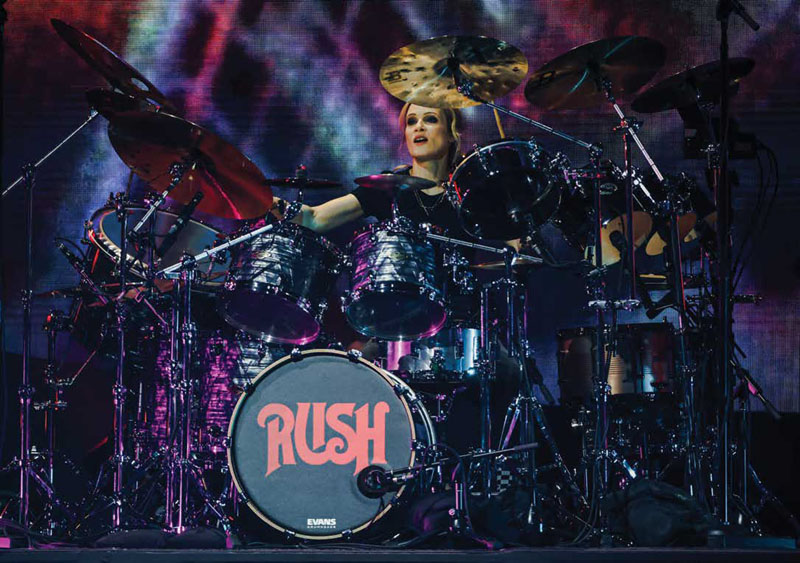
For Anika, it wasn't just about recreating the records. It was about bringing her own perspective to the music.
LEE: I don't know if Al feels the same way, but I think she's very respectful of whose parts she's playing. She understands that air drummers for the last 45 years have been out there mimicking some of those parts. She wants to do that justice. At the same time, she's a completely original and independent creative force, but she's sublimating a bit of that for the sake of a tribute to Neil. At the same time, the more she knows the songs, the more confidence she has with the songs. There are moments where she's now able to put her own special sauce on this song or that song. We'll start looking for moments to let her stretch out. We already have a couple in the set where I look at her and go, "Anika, this is free time. You go wherever you want to go, and I'll be there. We'll meet you there."
I look at it like this: There have been phases to this adventure. Phase one was her understanding Neil's role in Rush. Phase two is like, we've learned all the songs, now let's have some fun with them. Now we're massaging the arrangements and seeing how they can go. At the same time, we're not out there to turn it into a new thing. We're there to represent our songs with our hearts and with our best playing fingers forward. And we want fans to celebrate that music with us. The mandate isn't to change everything. The mandate is to be respectful of the arrangements of the song at the same time elevate from the norm.
You've hired Loren Gold as a touring keyboardist, so it's something of a new presentation.
LEE: That's correct. That's what we wanted. When people come in and look at the stage setup, it's not a trio. It's not Rush 2.0. It's a new time and we've got a different vibe, but the music is treated respectfully.
Alex, are there any new guitars you'll bring out on the road?
LIFESON: Yeah, a few. Kirk Hammett gave me one of his Greenies. I've been having fun with that. It's a pretty raunchy Les Paul, for sure. The Gibson Custom Shop did such an amazing job on it. The relic'ing is just spectacular. It sounds really, really great. There's a couple of other Les Pauls. [He gestures to an Explorer on the wall] Oh, and I just got this from Gibson. This is a guitar that Cesar [Gueikian], CEO of the company, made with some of the craftsmen there. He sent that along for me to check out, so I've been fiddling around with that. It's so different for me in terms of its shape and style. I've got to get used to it.
My original ES-355 has gone to someone else, but I have one of the reissues that I'll have on the road. I'm still sort of building that arsenal. I think I had 23 guitars on the last tour. I'll probably have 15 or 16, something like that. I don't know how many Ged's going to take out this time around. Ged, I think you had probably 25 basses on the last tour.
LEE: Last tour, I had 27 vintage bases that I played. I don't know if I'll get through 27 this time, but it's a slightly shorter show and I've fallen in love with my beautiful '62 Jazz Bass. I'm going to play that on quite a few songs, but I'm also planning to bring some unusual things out. I've got a couple of classic Rickies that I'll bring out. I've got some Hofners and T-birds that I've fallen in love with. I'm going to have, I don't know, maybe 10 to 15 instruments I'll try to work into the set.
At the end of those five days you did with Anika, if things didn't work out, for whatever reason, would that have been the end of this experiment, or would you have regrouped and tried something else?
LIFESON: Who knows? I mean, it's impossible to say.
LEE: My gut tells me we would have regrouped and looked elsewhere, but I'm very happy we didn't have to do that. We're really lucky. And also with Loren Gold, our keyboardist - I met him in 2014 when I did a charity show with the guys from the Who in London for their 50th anniversary, ironically. We kind of hit it off. Again, he was one of those names that just stuck in the back of my mind. And when we talked about adding a keyboard player, his was the first name that came to mind. We're very fortunate that the two people who were top of our minds both have worked out really, really well. That's a little bit of a blessing from above, I think. Someone's looking after us there.
Of course, as you said, Neil is irreplaceable, and he's beloved by the band's fans. That said, people seem to be very excited to see Anika play with you guys.
LEE: We're very gratified with how well she's been welcomed by the Rush family, so to speak. They haven't even heard her play one note with us yet, and there's already this kind of outpouring of love for her, and they've shown her tremendous kindness, which I know is inspiring for her. It's been very gratifying to see the response.
She must be a real inspiration to female drummers around the world.
LEE: Yeah. I think that's a great part of her story. I love that part of her story. I've gotten mail from young girls, older women saying, "Right on, man. Thank you."
And now she's part of your story.
LEE: Totally. But let's be clear: We did not hire Anika Nilles because she's a woman. We hired her because she's an incredible drummer, and not just an incredible drummer - an intelligent, hardworking, responsible... I couldn't even get her drunk last night! [Laughs] I tried. She's a unique individual. In many ways, she reminds me of the big goof who sat on the throne before her. She's a total professional, a work-first person. The fact that she's female and she's doing that for women musicians around the world, that's a bonus. It's not the reason she's in that seat.
Closest to the Heart
The 20 greatest Alex Lifeson guitar moments from Rush's studio catalog
By Ryan Reed
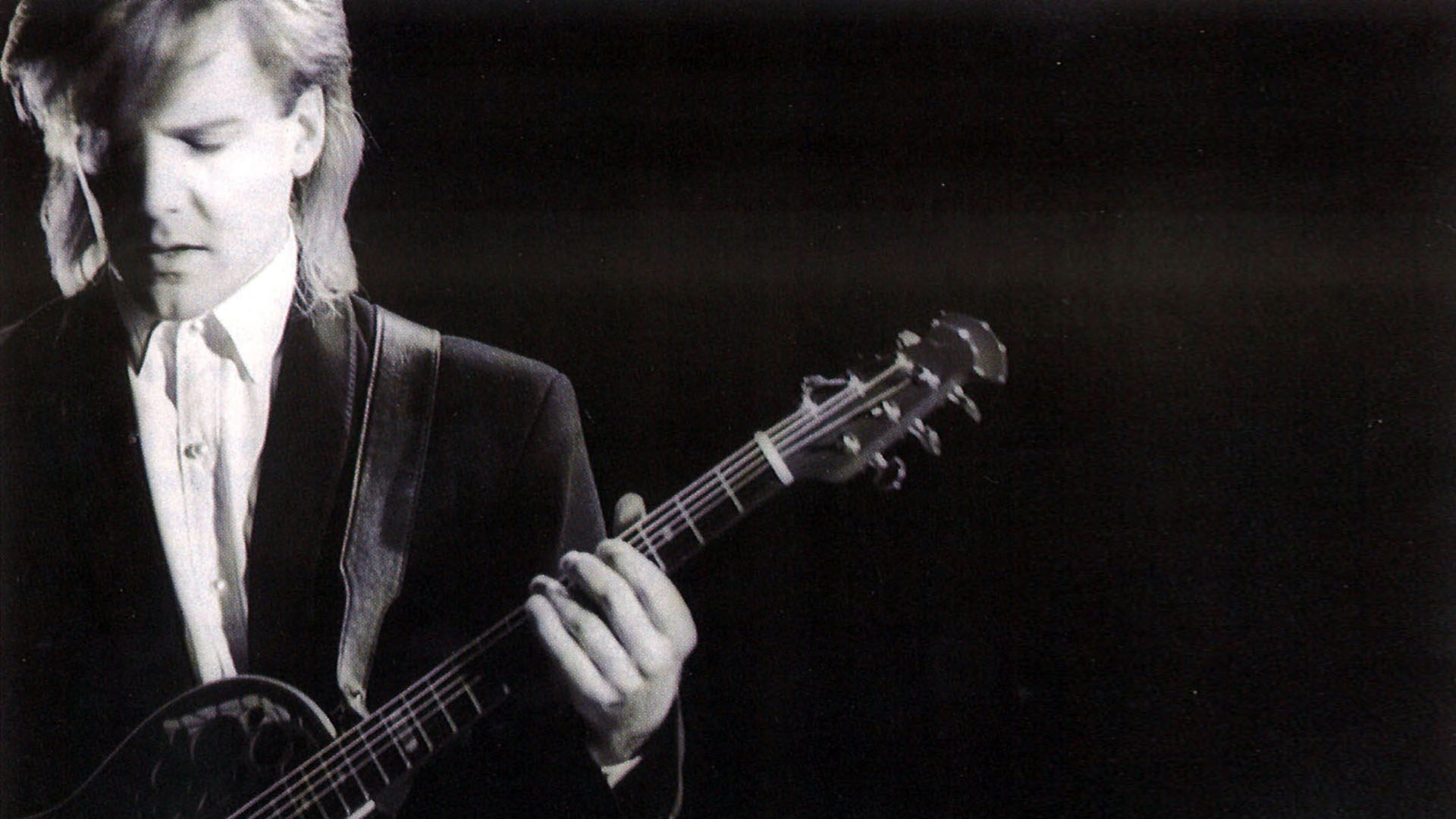
The 20 greatest Alex Lifeson guitar moments from Rush's studio catalog
I've never been very confident, to be honest with you, as a player," Alex Lifeson told Guitar World in 2025. "I've always felt like I had to work hard, and maybe I didn't appreciate that I have a natural talent for playing guitar."
Anyone who's heard his work as one-third of the prog-rock institution Rush - from those crashing, Pete Townshend-like chords to his dramatic, shimmering arpeggios - knows he's being charmingly modest. That, or maybe he just needs to re-examine his own songs.
But that's where we come in. To celebrate his 2026 reunion tour with bassist Geddy Lee - which follows the 2015 R40 run, their final outing with late drummer-lyricist Neil Peart - let's take a closer look at 20 of Lifeson's finest studio guitar moments.
"WORKING MAN"
(FROM 1974's RUSH)
Rush were still in their embryonic Led Zepworship mode in 1974, but they did scrape together one genuine classic for their self-titled debut - an overdriven riff monster with icked power chords, bluesy shredding and a nimble, octave-ascending riff halfway through that feels worthy of spawning its own song.
"FLY BY NIGHT"
(FROM 1975's FLY BY NIGHT)
"Fly by Night," the bruising title track from Rush's second LP, opens with a flurry of guitar moves that wound up becoming Lifeson signatures. The triumphant D major, the resounding sus chord, the beautifully tense and chromatic arpeggio - there are so many little moments, just in the first 10 seconds, that can make any Rush fan smile and nod with recognition. Guitar-wise, it's all building to a killer post-chorus solo, stacked with bluesy bent notes and pinched harmonics.
"THE NECROMANCER"
(FROM 1975's CARESS OF STEEL)
In a 2018 Guitar World feature, now-former Gwar guitarist Pustulus Maximus broke down his love for "The Necromancer," a nearly 13-minute psych-prog fantasy behemoth from Rush's third LP. "The beginning sounds very much like Pink Floyd, but Lifeson's solo in the rock part has an amazing groove and feel," he said, describing the epic's ebb and flow. This one's definitely unique in the band's catalog - from that stoner-ific intro section, with reversed guitars and chorus-y guitars rising like weed-smoke plumes, to the sheer ferocity of the solo and the clean-tone jangle that follows. "The Necromancer" is (understandably) a divisive Rush song, but no one can doubt its merits as a well-rounded guitar showcase.
"2112"
(FROM 1976's 2112)
It almost feels unfair to cite "2112" as a song, given that it sprawls out over seven sections and nearly 21 minutes - occupying the entire first side of Rush's titular breakout LP. But Lifeson really swings for the fences throughout this grand conceptual work: nailing those enormous delayed chords in Overture, bathing his arpeggios in cinematic chorus throughout "Oracle: The Dream," adopting an almost punk-like energy during the climactic attack of "Grand Finale." One of his most genius moments actually involves the technically weakest playing; at the beginning of "Discovery," his out-of-tune plonking approximates our protagonist stumbling upon a guitar ("What can this strange device be?" Lee sings) and figuring it out in real time.
"CLOSER TO THE HEART"
(FROM 1977's A FAREWELL TO KINGS)
Despite being heralded as an elite of heavy prog guitar, Lifeson has a real knack for gentle, pastoral playing. As he explained to GW's Acoustic Nation, the band workshopped their earliest material using acoustics and a cassette recorder - then bringing in the amplification and energy later on. "Closer to the Heart" shows the best of both worlds, as Lifeson builds from chiming 12-string to, eventually, anthemic harmonized solos.
"XANADU"
(FROM A FAREWELL TO KINGS)
The mighty "Xanadu" expertly illustrates how Rush did so much with so few pairs of hands: Lifeson and Lee tag-team the driving main riff with maximum creativity, tackling the descending lines in unison or veering apart for added color. The standout guitar section happens immediately, with Lifeson adding ambient volume swells over Peart's drifting chimes.
"LA VILLA STRANGIATO (AN EXERCISE IN SELF-INDULGENCE)"
(FROM 1978's HEMISPHERES)
The winking subtitle points to the band's underrated sense of humor - and on this hypnotic instrumental, Rush use Lifeson's ever- vivid real-life dreams as a launching pad for some of their wildest genre flips and tightest ensemble playing. Across nearly 10 minutes, the trio explore everything from psychedelia to hard rock to jazz-fusion, with Lifeson the obvious star of this dreamscape. His solo swells during A Lerxst in Wonderland might be the most evocative playing in his catalog.
"JACOB'S LADDER"
(FROM 1980's PERMANENT WAVES)
After a bright, strident opening march, Rush chase the storm clouds into one of their heaviest- ever riffs. Lifeson is at the top of his game here, layering his guitar theme into octaves for even more impact. Rush were rarely more intense than they were on "Jacob's Ladder."
"FREEWILL"
(FROM PERMANENT WAVES)
Despite all the recorded evidence to the contrary, Lifeson and Lee are mere mortals. When they started jamming again after a long hiatus following the R40 tour, the guitarist told Ultimate Classic Rock that they sounded like a "really, really bad Rush tribute band." The toughest nut to crack was reportedly the surging fan-favorite "Freewill," which features one of the most frenetic guitar solos he ever tracked. "There's a lot of notes," he said. "The solo is crazy."
"YYZ"
(FROM 1981'S MOVING PICTURES)
It's the most fittingly proggy sidebar in Rush history; the band's first Grammy nomination came with "YYZ," a track built around a rhythmic Easter egg nodding to Morse Code for a Toronto airport. Just perfect. The song's main riff is already ace enough, showing just how much mileage you can get out of two notes if you put your mind to it. But the piece becomes a classic when Lifeson stretches out - the solo at the midway point is deliciously disorienting, peaking with a virtuosic run of finger-tapping.
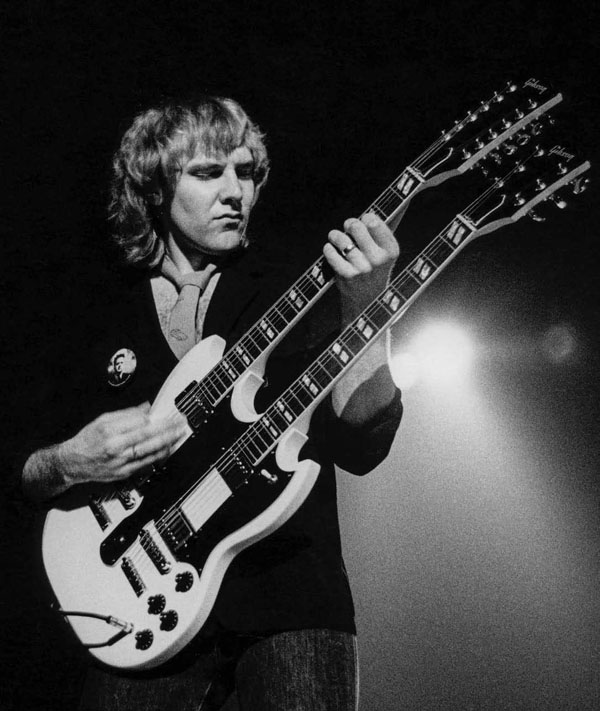
"LIMELIGHT"
(FROM MOVING PICTURES)
"Limelight" is up there with the most poignant Rush tracks, channeling Peart's fame-induced isolation into four minutes of sleek (if still proggy) radio-rock bliss. Lifeson's dreamy arpeggios and chunky chords are already enough - it's just a bonus that he churned out a god-tier, whammy-filled solo on his Hentor Sportscaster, a Strat outfitted with a Gibson humbucker and a Floyd Rose tremolo. "It was the perfect selection to create the soulful, elastic and unstable character for the solo of that song," he told Guitar World.
"THE ANALOG KID"
(FROM 1982's SIGNALS)
"Signals was a weird record for me," Lifeson told Guitar World in 2025, noting that their heavier use of keyboards created "more of a fight for space with the guitar." But that argument shouldn't apply to "The Analog Kid," which saves most of its synth presence for some booming pads on the chorus. Elsewhere, Lifeson takes charge - including on the solo, which features a nifty harmonizer-type effect.
"DIGITAL MAN"
(FROM SIGNALS)
Upon first listen, "Digital Man" sounds more suited to a list of Geddy Lee's finest moments, given his wildly melodic and grooving bass line. You might even look first to Peart, who adds some tastefully placed tom-tom fills and fierce hi-hat work. But Lifeson also deserves marquee mention, anchoring the track with his stabbing, Police-like chords and a woozy solo with a touch of David Gilmour in its bluesy bends.
"KID GLOVES"
(FROM 1984's GRACE UNDER PRESSURE)
Is this Lifeson's ultimate guitar solo? The tremolo-bar madness, the blue-sky harmonics, the brushes with ska and rockabilly - all packed into one blistering run that somehow feels both composed and improvised.
"HAND OVER FIST"
(FROM 1989's PRESTO)
Why did Rush never play "Hand Over Fist" live? Why did they refrain from releasing it as a single? No great answer. This punchy rocker is a highlight from the sadly overlooked Presto, with Lifeson leading the charge. He does a bit of everything - that trebly funkrock intro, the busy bluesy groove, the squealing pinched-harmonic leads, a less-is-more solo with some majestically sustained notes.
"LEAVE THAT THING ALONE"
(FROM 1993's COUNTERPARTS)
As the Eighties wore on, Lee's keyboards grew to be a little controversial, both within and outside the band. After a series of more atmospheric, synth-heavy LPs, Counterparts arrived like a welcome punch of heaviness, offering more of an overall sonic balance - and much-needed presence to Lifeson's riffs. "Leave That Thing Alone" is a perfect example, highlighted by his skyrocketing, psychedelic solo.
"TEST FOR ECHO"
(FROM 1996's TEST FOR ECHO)
Lifeson was so enthused about his guitar tone on "Test for Echo" - a roiling, textured wave of acoustic and electric - that he gave Guitar World a thorough, multi-paragraph breakdown. He used a Les Paul Custom and a Godin Acousticaster, tuned down to D standard, through a variety of heads and cabinets. But the most important element here is the vibrancy of his riff writing, which suggests that perhaps Rush had been soaking in Tool's recent work.
"EARTHSHINE"
(FROM 2002's VAPOR TRAILS)
Lifeson once again sounds like he's channeling Tool and other modern progmetal throughout Vapor Trails, often exploring ultra-dark guitar tones via modernsounding production. Of course, the album's sound was, to put it mildly, polarizing, and Rush released a remixed edition in 2013. "Earthshine" might be the album's sonic and songwriting peak, with a choppy riff pogoing off Lee's high, yearning vocal.
"BRAVEST FACE"
(FROM 2007's SNAKES & ARROWS)
When you've been a rock band for three decades - especially one with a sizable fan base - it's hard finding new pathways to explore. It's admirable, then, just how different Rush sound on "Bravest Face." Here, Lifeson often zigs when you expect him to zag, moving from a grungy atmosphere into a raw acoustic riff and a solo with a strangely laid-back, bluesy vibe.
"CARNIES"
(FROM 2012's CLOCKWORK ANGELS)
"Carnies" is easily one of Lifeson's simplest guitar riffs - but it also might be his heaviest, built on some borderline-metal harmonics that carry the entire song. But he also manages to work in some experimental flourishes, including a kaleidoscopic tremolo effect that lends itself well to the subject matter. "It's almost like a carousel," he told Guitar World upon the album's release. "Ged and I were like, 'Oh, my God, that's so cool!' It really sounds like you're on this horsey going up and down."
Heavy Lies the Crown
By Ryan Reed
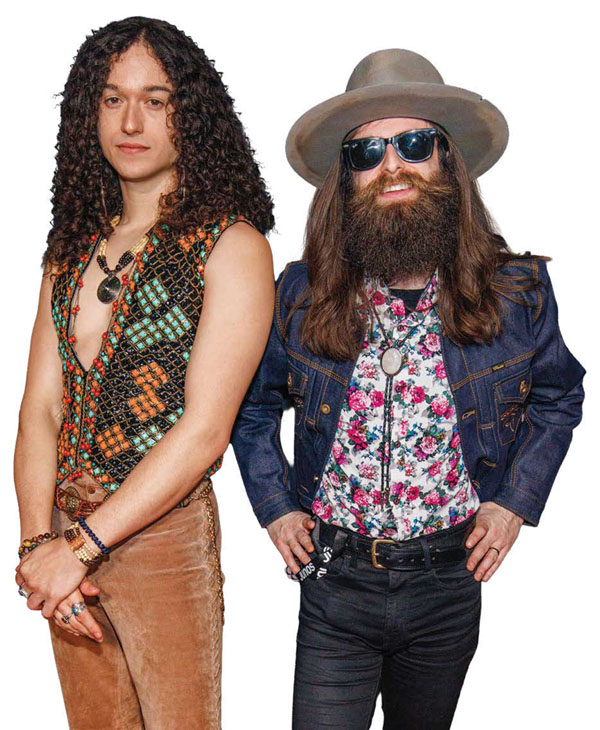
Whether they're being praised as torch-carrying titans or derided as classic-rock cosplayers, Canadian duo Crown Lands are often cited as the modern-day Rush. But Kevin Comeau - their guitarist, bassist, keyboardist and now primary producer-engineer - isn't concerned about the endless comparisons. They'll certainly receive more upon the release of their third LP, the conceptual sci-fi epic Apocalypse. But they're expecting that chatter; after all, the reference point was consciously baked into the band's DNA back in 2015, when he met his long-lost brother in prog, drummer-singer Cody Bowles.
"When we started the band, we joked to ourselves, 'What if the White Stripes covered Rush?'" Comeau tells Guitar World. "We just kept leaning more into the Rush than the White Stripes as time went on. I still think, sonically, Rush's Moving Pictures is as perfect a record as you can get. As a producer, I'm always chasing the clarity of something like Power Windows."
In fact, connecting these virtuosic Canadian bands feels like the ultimate accolade. "We're not worried about people comparing us to Rush," he says. "I don't think you can get more complimentary than a comparison to Rush. I love seeing the discourse online - 'I don't like them. They sound too much like Rush.' Or 'I don't like them. They don't sound enough like them.' I've always loved Rush's [philosophy of thinking] - 'We want to be the world's smallest symphony orchestra.' Trying to do that with two people is like trying to one-up our heroes - or one-down our heroes."
Apocalypse is their most grandiose adventure into this symphonic realm, building on the proggy template - and interstellar good-and-evil storyline - they established with 2023's Fearless. The album balances spacey balladry ("Through the Looking Glass") with heavy, punchy rockers ("Blackstar"), all building to the 19-minute climax of the title track, which also pulls inspiration from the Allman Brothers Band and the bonkers 1974 Yes piece "The Gates of Delirium."
Their long-form centerpiece, with its textural shifts and cinematic key/tempo changes, offers plenty of space for Comeau on guitar - from crunching power chords to jittery arpeggios to bluesy leads that sound beamed in from The Wall. That fluidity and constant surprise keeps the piece engaging, much like "Echoes" or "Supper's Ready." "When you have a record about going through a black hole and fighting your arch villain through time and space," he says, "the music ends up writing itself. You end up pushing all the crazy polyrhythms even further."
But the monster runtime wasn't the ultimate goal, even if Comeau gets a nerdy thrill out of seeing the track tick past the 19-minute mark. "You're chasing length a lot of the time in prog," Comeau says. "I'm always chasing the 20-minute opus. When we sent the final mix to Ted Jensen, it was 19 minutes and 1 second. Mastering engineers will often lop off any dead space, and the master came back at 18:58. It's the first time I've ever had to send a revision - 'It sounds great, but can you restore the four seconds of silence at the very end so that it stays past 19 minutes?' It's so stupid, but that's progressive rock, baby!"
Even if all of these tunes had been short, Comeau would've had his hands full on Apocalypse; along with playing guitar and producing the bulk of the material, he also continued to handle all of the bass, synths and bass pedals. To put it in Rush terms: part Alex Lifeson, part Geddy Lee. To pull off that crazy feat on stage as a two-piece, especially with their songs growing more complex, Crown Lands would either need to scale back dramatically or get super creative. They've chosen the latter route, with Comeau often playing a double-neck guitar/bass custombuilt by luthier Brock Stoyko. (There was also a major assist from Lee's bass tech, John "Skully" McIntosh, who helped him wire it. And to land on a suitably "ergonomic" design, Comeau went to Lee's home and took measurements of the Rush legend's own double-necks.)
Comeau's admiration clearly extends well beyond "casual fan." In 2021, Crown Lands joined Lifeson on stage during the annual Andy Kim Christmas Show in Toronto, joining for an all-star Led Zeppelin medley. "In rehearsals, I'm playing every Rush riff I know, like 'The Necromancer,' and Alex is just laughing," Comeau says. "He was so cool. He said, 'I don't want to play my double-neck for this song - it's too long and heavy.' I said, 'I'll do it!' He leant me his white Gibson EDS-1275 for 'Stairway,' so I'm doing the 12-string part while he's doing the solo. I'm like, 'Holy shit, this is life-affirming.'" Later, Comeau helped Lifeson catalog and tune his guitars for a charity auction, and he wound up being Lee's keyboard tech ahead of 2022 Taylor Hawkins tribute show.
Prog is in Crown Lands' blood, and their Rush worship is pure. "When I found Cody, it was like, 'It's perfect!' We're so deep into this niche; I don't know where we'd be if we didn't have each other to fill in [our] musical holes. I see that in Rush. They're such singular musicians that, if they were in any other context, it wouldn't work. The way they were able to last for 40 years, how they've stayed friends when the meat grinder of the industry destroys friendships, is so special."