Rush, It's Family Affair. Alex Lifeson On The Joys Of A Celibate Life
Metal Machine, 1988, transcribed by pwrwindows
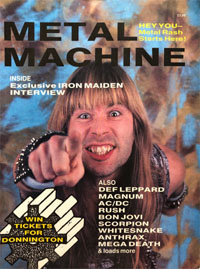
Rush aren't one of those bands who hit tabloid headlines with torrid tales of excess. There's no paparazzi snapping Alex, Geddy or Neil with luscious lovelies in niteries.
They're hardly the archetypal rock & roll band.
Alex Lifeson chats about why, and how they managed to stay together for 19 years, 13 of which they spent touring. "We must have done something different and right because there aren't that many bands that last that long. Because we're also close friends it was also very important to retain a family feel to the way we approach our organisation. Our music and our business. We're very good friends with our crew.
"There are some guys in our crew that have been there for 13 years." They've even had the same management for nigh on 2 decades, so it looks like everyone is on a pension scheme!
Alex appreciates that they've done things the way they want and have still had commercial success. "We do enjoy and love what we do. We really do enjoy making records. We were so well organised with Hold Your Fire and we ran everything so efficiently that we actually finished the recording early. It's a first for us. So it's still a labour of love for us, and we still enjoy touring so long it's not too crazy as it has been at times in the past."
The good old protestant work ethic raises it's sweat-stained brow at this point, and we're back to family again. Alex reckons it's his background which gave him the discipline and desire to work hard and achieve.
His parents were hard working immigrants from Yugoslavia, his dad had 3 jobs - in a factory, as a plumber and a taxi-driver. His mum had 2 jobs, but things were still "tight". "I think this is why we (Rush) work so hard. We were brought up to realise that if you want to get anywhere you're gonna have to work for it.
"We work very, very hard on the road, we tour a lot and we look at it as a career whereas for some other bands it's a lifestyle and an ideal to involve sex, drugs and rock & roll, have a good time for 5 years and then it's over. For us we've always been musicians before being a particular rock band."
The early days were tough for Alex and the guys, "living in small apartments, barely paying rent". Alex worked in a petrol station for a while and helped his father out with his plumbing business. (He still loves to fix a tap or tinker with a car il it goes wrong!). Now they've got the creature comforts that commercial success brings. Isn't there a danger that losing that hungry edge can dull the musical sensibilities so you end up playing safe to shift the units?
"Yeah, you then don't take chances and try something new for fear that it's not going to do well, and that you're not going to have this Mercedes or whatever next week." But Rush are one of the few major league bands who do try something different with each album, as Alex says sometimes it works and sometimes it doesn't, but whatever they keep experimenting and trying new things, trying to challenge themselves musically.
They might enjoy more comfortable lifestyles now, but are still as demanding as ever musically on each other and on themselves.
Like father like son, Alex plumbs and tinkers like his father, Alex's son (age 17) wants to be a musician. He gets all the encouragement he needs from his famous dad, although Alex comments wryly that he's only been in one band in 19 years whereas his son's been in 4 or 5 already in just 2 years! The whole game-plan for young bands seems to be different, as Alex explains:

"I started in Rush when I was 15 and right from the start we wanted to write our own music and we wanted to play every chance we got. For him, they took promo shots, put their hair up, gave them more make-up and threw in some money for a studio photo session but they never played a gig and they had never any intention to do so. They only knew 5 songs. But they liked the image of being in a band."
Still, he's encouraging him to take up the guitar seriously, to have classical lessons "to learn technique and discipline."
Discipline is a key word in the Rush camp.
Writing and recording is done to a regular schedule in a farm with a studio outside Toronto. An album's worth of material takes about 7 weeks to prepare. The band work 6 days a week, with a typical day starting off with a discussion over breakfast at about 10am.
Geddy and Alex put down musical ideas in the studio and Neil writes all day in the farmhouse, surrounded by sheets of paper and overflowing ashtrays.
At about 6pm they're ready to put words and music together and for an hour and half before dinner they "all get together and work on the arrangement, make sure the lyrics fit correctly. Geddy's got to feel that he's singing the lyrics with conviction as though he wrote them and also that mechanically it's easy to sing."
After they've eaten, usually from about 9 til midnight, they actually play the material they've been working on. That's important to do before recording starts so it doesn't sound "like it's just pieces put together" when the tracks are finally recorded.
By the time they do get into the studio they've also been through all the material with their producer, and know "what we want to accomplish with our music, so it's really a matter of fine tuning at that stage."
It might all sound a bit mechanical, but there's tried and tested method in their madness. Apart from the extortionate costs of studio time, Alex reckons that there's less wear and tear on the musician when you don't have the stress and pressure of panicking to get things finished to a deadline in the studio. Being orderly about things gives you more time to be relaxed, and that improves your performance.
Rush in its present guise have been together for 13 years, and their popularity is still following that elusive upward curve. That's given them their "very solid foundation."
Alex is very happy with the way their lives are going, they've got the luxury of professional choice now, they don't have to either tour or record for the sake of earning a few bucks. They could go for the big bucks in a serious way, but that isn't the way Rush work. "I mean every year we get asked to play Donnington and every year we get offered more and more money. For us to play Donnington now we could make a lot of money to come in, play one day, and go home.
"It's the same money like working two to three weeks on a tour. We always say no because it is summertime and we would rather be at home with our families. Our manager looks at us and he thinks we're crazy. So maybe we are a bit crazy after all."
If that's madness, perhaps we should let the lunatics take over the asylum!