"Making Memories" - "The Curious Case Of Roger Kneebend (Or How Rush Made Grace Under Pressure...)"
By Dave Everley, PROG Issue #169, May 2026, transcribed by John Patuto
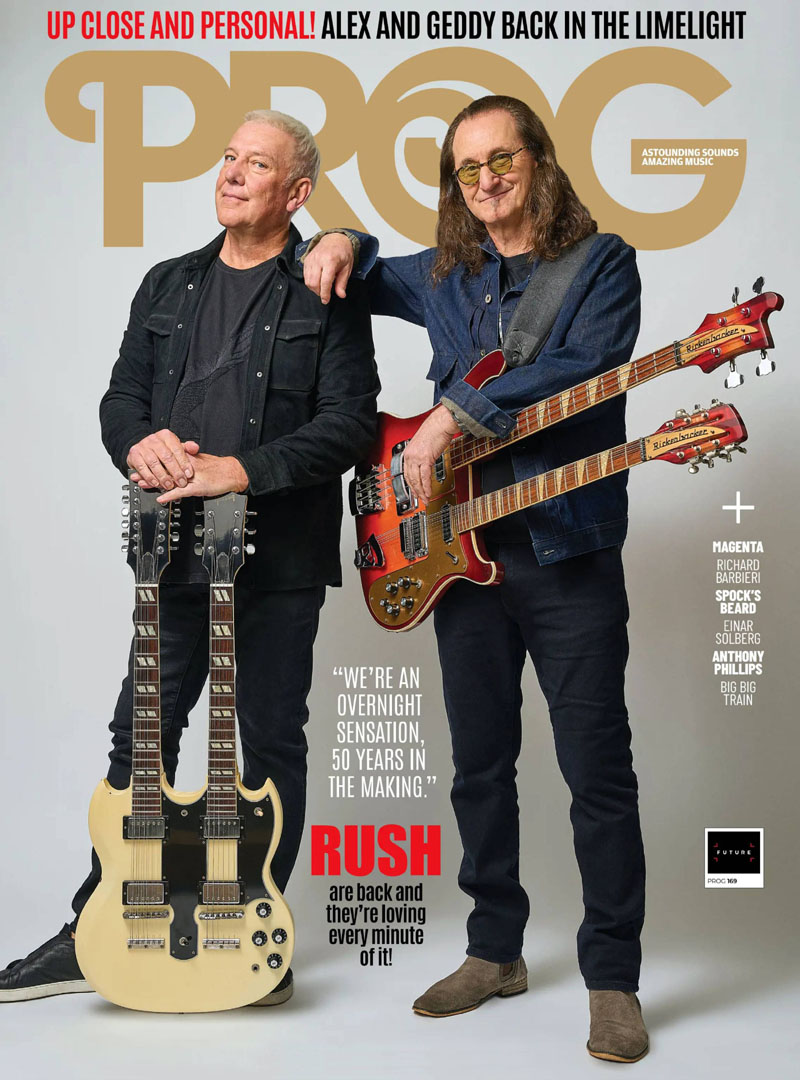
Ten years after their dissolution, Rush are back on the road with a new drummer to boot. The upcoming Fifty Something tour marks the debut of German musician Anika Nilles filling some impossible boots. Geddy Lee and Alex Lifeson tell Prog about the unexpected reunion, the spark that led to their 'unretirement' and we even manage to tease out some details about this year's shows.
Making Memories
A HOTEL ROOM IN LONDON, JANUARY 2026.
Alex Lifeson looks uncomfortable as he sits on the sofa next to the man he fired from Rush more than 55 years ago.
The big schism happened back in 1969. The band - at the time a four-piece led by drummer John Rutsey and also featuring keyboard player Lindy Young - were stuck in a rut. The strong-willed Rutsey decided that they needed to shake things up, and he decided to throw the kid they had singing and playing bass under the bus. Lindy young was tasked with delivering the news. Lifeson? He says he just went along with it.
"It was nothing to do with me," he protests today. "It was the other guys."
"I'm still not over it," says Geddy Lee, the one on the receiving end of that P45 all those years ago.
He's joking, of course. After a summer of taking acid, Lee rejoined his former bandmates and they picked up more or less where they left off.
"It worked out OK," says Lee, with knowing understatement.
It's January 2026 and a welcome burst of winter sunshine is lighting up the high-end central London hotel suite where the pair are currently holding court. Six months ago, this would have been unthinkable, at least in a professional capacity. Rush were over and done with, their illustrious career as a working band wrapped up and neatly packed away following the triumphant R40 tour in 2015.
That unexpectedly changed last October. The announcement that Lee and Lifeson were resurrecting Rush for a US arena tour, dubbed the Fifty Something tour, in the summer of 2026 was greeted with a mix of shock and euphoria. Shows sold out, more were added. A few weeks after we speak, a run of UK and European dates are announced for 2027. Demand is equally high. It's the biggest comeback of the decade.
"We thought we'd do a couple of nights here and a couple of nights there," says Lee. "We didn't think we'd do four shows in each city that would sell out in a matter of days. That's never happened to us."
"We're an overnight sensation 50 years in the making," says Lifeson with a grin.
It's funny watching and hearing Lee and Lifeson in action. They bounce off each other with the easy rapport of men who have known each other since they were 13 and - the odd temporary dismissal aside - have stayed close ever since. They're often hilarious, too: Lifeson exuberant, Lee wryer and drier. The Two Stooges.
There's one person missing, of course. Neil Peart was Rush's drummer and lyricist from 1974 until their retirement, as well as the Third Stooge in their comedy pyramid. His death in January 2020 didn't just rob the world of a phenomenal musician, it robbed Geddy Lee and Alex Lifeson of their best friend.
Paradoxically, if Peart was still here then there's a high likelihood that this reunion wouldn't be happening.
It was the drummer who precipitated Rush's original retirement, and he showed no sign of wanting to unretire, even as Lifeson and especially Lee clung to the hope that Rush wasn't truly over and done.
TORONTO, THE LATE 1960s.
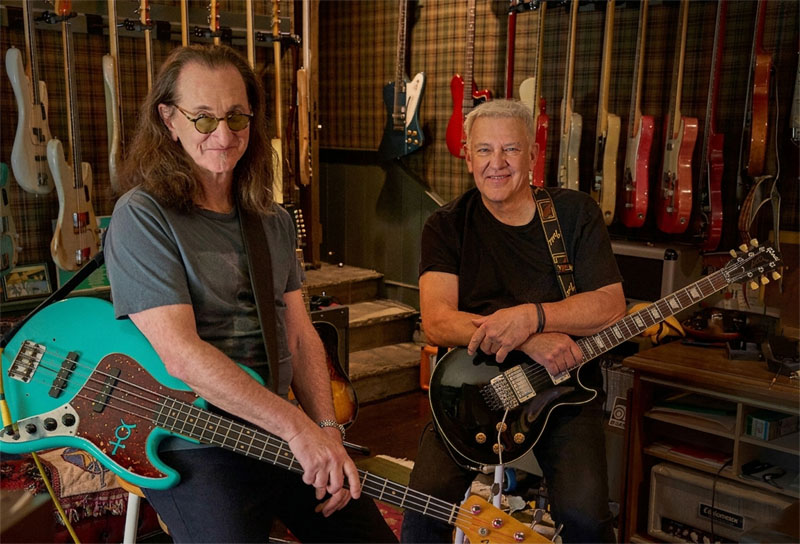
It was Alex Lifeson who got Geddy Lee stoned for the first time.
The two of them had met in junior high school when they were 13 years old. They had a lot in common. They were both children of Eastern European immigrants - Lee's parents were Polish Jews and Holocaust survivors (an incredible story detailed in the singer's phenomenal autobiography, My Effin' Life), while Lifeson's parents were from Serbia. Both were aspiring musicians, too, though it would be a while before they played in a band together.
"We were total outsiders," says Lee. "We just connected. We didn't hang around with anyone else in our class. We were just basically fucking around, we weren't paying any attention."
Lifeson: "Do you remember when we joined typing class? We were the only two guys in it. It was all girls. [Laughs] Maybe that's why we chose it."
Then marijuana entered the picture.
"He was the one who introduced me to it," says Lee, nodding across the sofa at his bandmate. "I was playing in this other band whose drummer was a Who freak - he dreamed of being in The Who. Me and Al were hanging out, sitting in one of these portable wooden classrooms they had, and he gave me my first joint.
"I got so fucking stoned. And then I went, 'Shit, I have to go to rehearsal.' So Al came with me. We were walking in slow motion across the park and I got to the guy's house, and he looked at me and went: 'Look at your eyes, man. Are you stoned?' He was freaking out like you'd expect your parents to freak out.
"I was, like, 'This is a bummer, man. Al, this guy's a drag. I gotta go home. How do I come down from this stuff?' And he went, [earnestly] 'You gotta drink Coca-Cola. It brings you down.' So, yeah, we kind of bonded over marijuana."
And you've never touched the stuff since.
"And I never touched the stuff since," he says, though he may be joking.
LONDON, 2026.
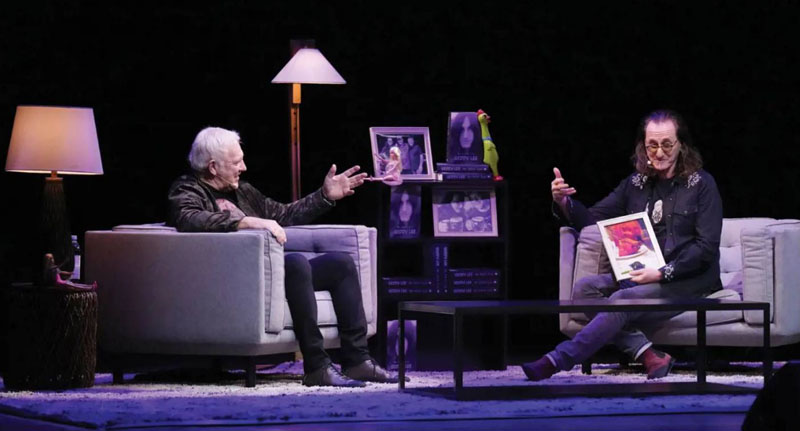
In October 2023, Geddy Lee began a book tour of the UK in support of his recently published autobiography My Effin' Life. The first date was in Portsmouth. He was joined onstage by a surprise guest - Alex Lifeson.
The two men spent the evening joking, cackling and taking the piss out of each other in front of the audience.
It wasn't the first time Lifeson had sat in on one of the book dates - he'd done the same in the US. And it wasn't the last-he'd rock up to the sold-out show at the Barbican in London.
It might not sound like a big deal, but it was illuminating as to the depth of a friendship that's fairly unique in music. Rock stars who've been in each other's orbits for 60 years generally don't spend too much time together when they absolutely don't have to. It's hard to imagine Roger Daltrey turning up to hang out with Pete Townshend while he reads a book. Would Roger Waters turn up to cheer David Gilmour on? Heckle loudly, maybe.
"The thing is, we make each other laugh," says Lifeson of the foundation of their friendship. "We like to just goof around with each other. Whether it's onstage, in a hotel room or in his living room."
"He's the funniest person I know," says Lee. "And I think I make him laugh too."
You must argue, though.
"Of course," says Lee.
What's the worst argument you've ever had?
"We've never had any kind of serious argument about music," says Lee. "Other shit, yes. Some stupid things. I remember one time during Grace Under Pressure, I wanted to borrow your car and you got all pissy with me. I was, like, 'What the fuck, man?'
Lifeson: "Really?"
Lee: "Yeah."
Lifeson: [looking genuinely apologetic] "Oh, sorry, man."
Geddy's done his book, Alex. When do you do yours?
"Oh, as soon as I learn how to write," he says cheerfully.
LA FORUM, LOS ANGELES, 2015.
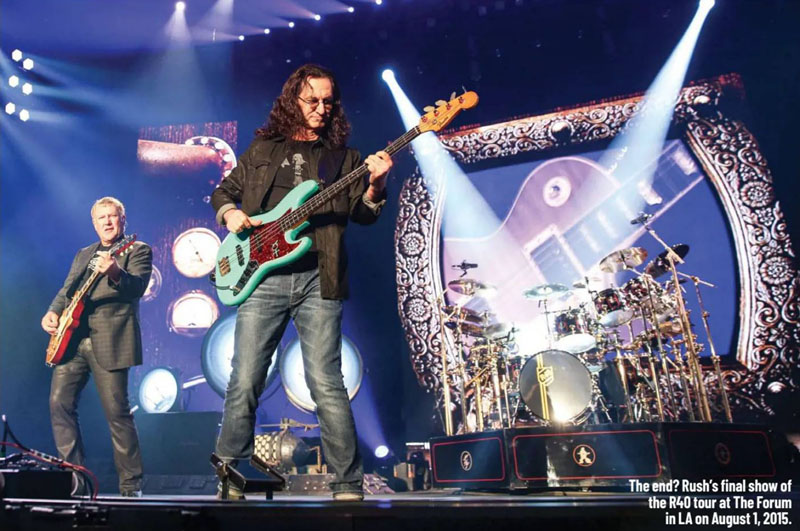
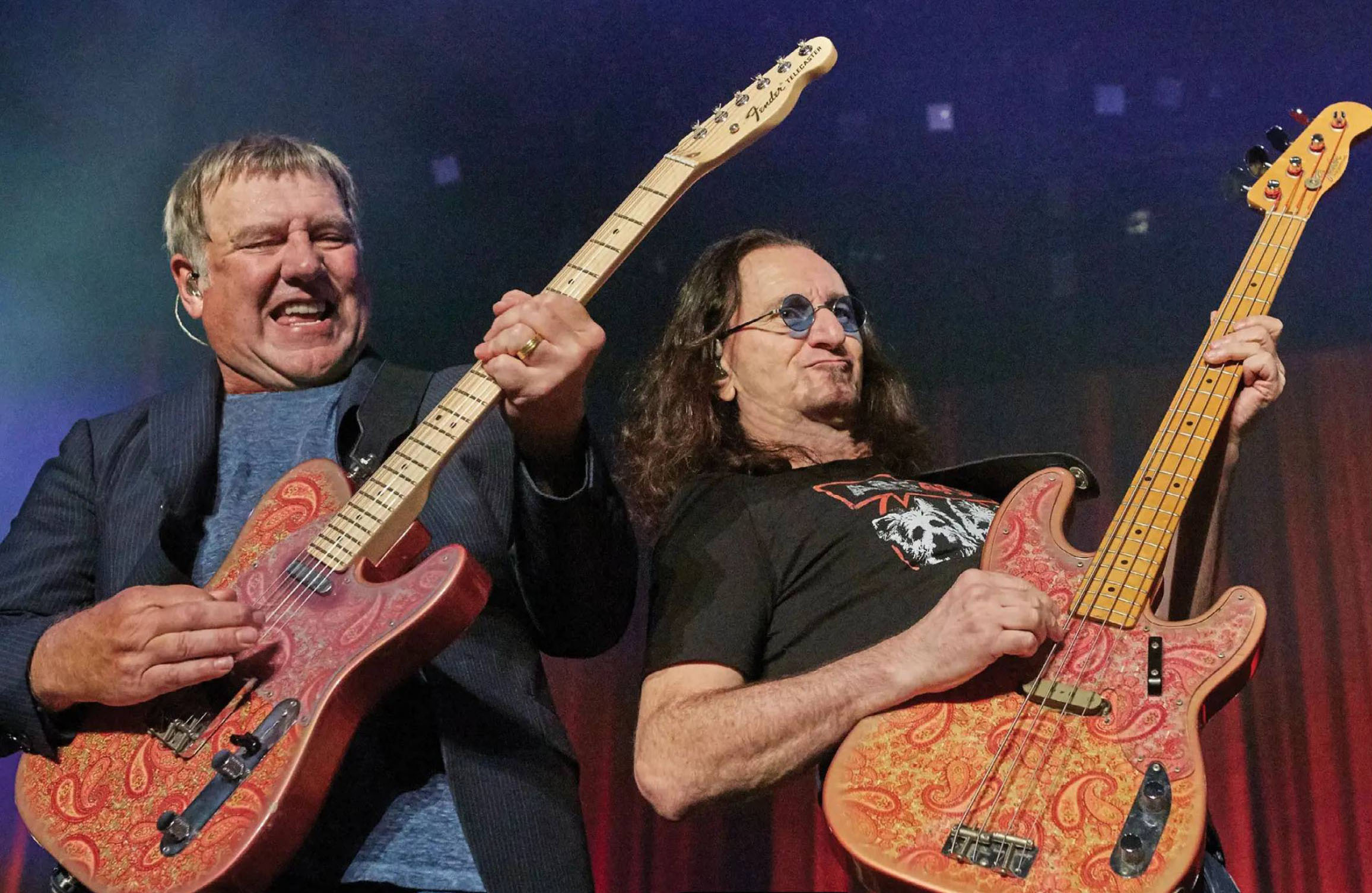
The curtain came down on Rush's R40 tour at the LA Forum on August 1, 2015. It was a glorious farewell, if a bittersweet one for at least two of the men up there onstage.
"We still felt like we had lots of gas in the tank and we could continue going," says Lifeson of Lee and himself. "But there was no extending it or looking beyond it. We just had to accept it, as difficult as that was."
Except even R40 might not have happened if Neil Peart had had his way.
"Neil was done before that tour," says Lifeson. "He'd had enough of touring."
Ironically, it was the guitarist who'd really struggled with touring in recent years. He'd been suffering from arthritis and digestive issues for a while.
Lifeson would have been well within his rights to call for a cessation of touring, but Peart got there first. When talk of what would become the R40 tour first arose, the drummer arranged a band meeting.
"This was just after Al had had surgery, and he wasn't really recovered from that," says Lee. "He kind of limped into the restaurant where we were meeting, and sat down. Neil came in with all this, 'I don't want to tour!' Al said, 'Well, I don't know if I have many more tours in me, so I'd like to tour now.' That's the one thing Neil couldn't say no to, which pissed him off."
He laughs at the memory.
"He said he went back to his room that night at the hotel and went, 'Fuck, fuck, fuck, fuck, fuck... I can't say no to that guy."
"He always reminded me of it," says Lifeson, sweetly.
TORONTO, THE 1960s.
Geddy Lee accurately describes Rush as a "big venue band". They've been a big venue band for so long that it's hard to imagine them playing small venues. But they did, for while at least, right at the start.
The first time Lee and Lifeson played together it was at The Coff-In, a once-a-week club in the basement of St Theodore's of Canterbury, an Anglican church in Willowdale, Toronto.
"I got a call from Alex going, 'Ged, we've got a problem'," says Lee. Jeff Jones, the band's original vocalist and bassist, couldn't make the gig. "I told Al I didn't know the set but he said we could load in early and rehearse until I did. And the rest, as my mother would say, is history."
When they weren't busy temporarily firing their new frontman ("Still sore," says Lee), they took whatever infrequent gigs they could, graduating from high schools and bar mitzvahs to bars and clubs.
There were some mismatched pairings along the way. Especially the time they opened for lipstick-smeared proto-punk pirates the New York Dolls at Toronto's Victory Theater in October 1973. It was a hometown show, so Rush were on relatively safe ground. At least they assumed so.
Alex Lifeson was living north of Toronto at the time and getting home was an epic trek, not least with all his gear to carry. Rather than take the subway and a bus, he and his buddy decided to hitchhike.
"It was a rainy night and thankfully this couple pulled over to offer us a lift," he says, half-wincing at the memory. "We got in the back seat and we were driving along, and I said, 'What have you been up to?', just to make conversation. And the driver said, 'We went to see the New York Dolls.' And his girlfriend said, "Yeah, and the opening act was so awful, we couldn't believe it...'"
He mimes the woman's face looking down at the guitar he was holding at the time and realisation dawning.
"We got to the bottom of the hill and I said, 'This is fine, we'll get out here.' So we end up walking the rest of the way in the rain, carrying my guitar case. I was thinking: 'Oh my God, I'm gonna be a plumber for the rest of my life."
LOS ANGELES AND TORONTO, 2015.
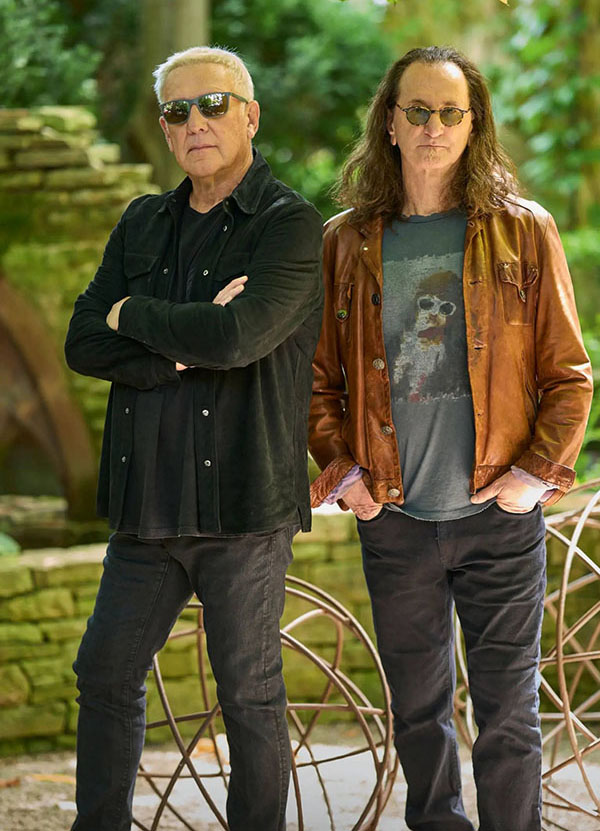
Even after Geddy Lee walked offstage at the end of the very last show on the R40 tour, he wasn't sure that Rush were completely finished.
"I had hope," he said. He raises his hand and makes a small gap between his thumb and his finger. "I had that much hope."
Alex Lifeson has a different memory of the immediate aftermath of the show.
"I remember going back to the hotel after the gig and there was a bit of a party," he says. "My family were there, my grandkids were there. After they'd all gone to bed, I went out onto my balcony and sat there by myself and had a smoke, feeling very lonely and so melancholy. I was kind of crestfallen by the end. The future seemed so dark."
"I can tell you, the flight home after the show was not a happy place," says Lee. "We were all very, very quiet. I have a photograph that one of our guys took, and you can feel it in that picture."
Over subsequent months, the sliver of hope that Lee initially felt faded. It was clear that Neil Peart wasn't going to change his mind.
"They had filmed the tour and recorded it and they wanted to put it out, so we still had to talk about details around that," says Lee. "But I don't think our hearts were in it. It was hard to focus on.
"I think, initially, I was a little pissed, a little angry," he continues. "And then I had an email conversation with Neil, because I had listened to the drum solo he had picked. I wrote to him out of the blue and said, 'Dude, it was so fucking good, I'm glad you picked the right one.
"And it brought up this whole conversation about his new life and how happy he was, and it broke that feeling I had completely: 'What kind of friend are you, being so selfish, thinking about yourself when this guy is so happy now, this is what he wanted and what he needed?"
Lee, an avid ornithologist, immersed himself in bird watching and began working on The Big Beautiful Book Of Bass, the lavish coffee table book-come-love letter to his chosen instrument. Lifeson began working on musical projects of his own.
"And then we got the terrible news in September [2016] that Neil was ill," says Lee. "That scrambled everybody. There was no thought of work."
Lee and Lifeson would meet up from time to time to have dinner, and they would visit Peart to support their old friend. His death, on January 7, 2020, understandably hit them hard. The fact that the Covid pandemic was brewing at the same time only compounded things.
"To have gone through the emotional shock [of Peart's death] and then to be locked up, it was a pretty weird time," says Lee. "So that's when I started writing my memoir, and that really got me through the next couple of years.
I think Al was well into his Envy Of None project at the time, too."
With Peart gone, and his former bandmates immersed in their own projects, that flicker of hope Lee had felt in 2015 that Rush weren't done was finally extinguished.
Until it wasn't.
LONDON, 2026.
One of Neil Peart's most moving lyrics appears on Rush's 10th album, Grace Under Pressure. The song, Afterimage, deals with the mark people leave when they're gone, and the memories and emotions their absence stirs.
Afterimage was a tribute to Robbie Whelan, an assistant engineer at Le Studio in Quebec, where Rush had recorded several of their recent albums, who had been killed in a car accident while driving to the studio. 'Suddenly, you were gone,' sings Lee, vocalising the drummer's words. 'From all the lives you left your mark upon.'
The poignancy of those lyrics has only intensified since Peart's death. Today, as we sit in the hotel suite, the drummer is almost an invisible presence. Lee and Lifeson talk about their old bandmate and friend warmly, but they're not above laughing at some of his stranger foibles, presumably like they would if he was sitting between them right now.
Peart replaced John Rutsey in 1974. Lee concedes that it was hard for this gawky, slightly awkward kid to insert himself into the tight friendship he and Lifeson had.
"Oh yeah," says the singer. "We'd talk about him all the time like he was an alien, 'cos he seemed kind of like an alien. He was very different to anyone else we hung around with. His hair was too short, and he would talk about things we never talked about - big, weighty subjects. And he was reading all the time."
And you two weren't readers?
Lee: "We read things like Lord Of The Rings. We read the fun shit. He read everything."
Lifeson: "He was deep, all the time."
Lee: "He was so verbose. He could talk about anything. And that's when me and Al said, [conspiratorial whisper], 'Hey, he reads books. Let's make him do lyrics.'"
Lifeson: "He was a little reluctant, but then he said, 'Yeah, OK, I'll give it a try.'"
Lee: "It worked out OK, I think."
It did work out OK. But Peart was more than just an extraordinary drummer and unique lyricist. He was a key component of the perfectly balanced chemistry that made Rush who they were. Even now, it's hard to imagine the band without him - not least for Peart's family. How was that conversation?
"It was uncomfortable," Lee says slowly. "They had to get their heads around us moving forwards, which they did, and they eventually gave us their blessing. But yes, of course it was surprising for them."
WEMBLEY STADIUM, LONDON, 2022.
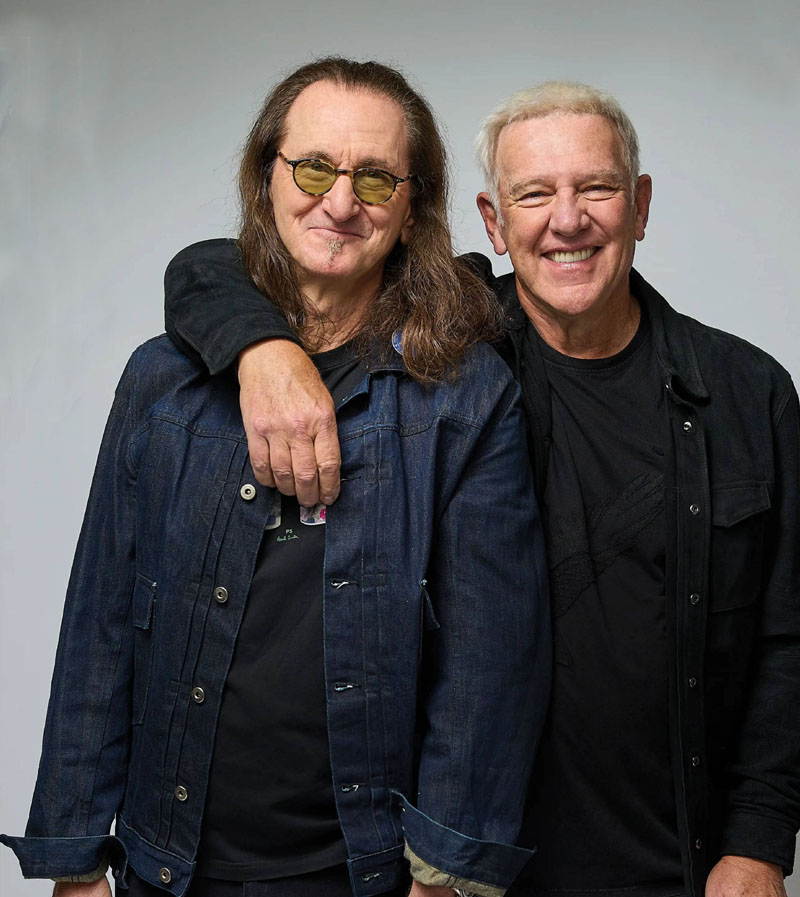
Rush's path from retirement to unretirement wasn't entirely smooth. The first flicker that a return wasn't beyond the realms of possibility came in September 2022, when Lee and Lifeson took part in the two tribute gigs to late Foo Fighters drummer Taylor Hawkins at Wembley Stadium in London and LA's Kia Forum.
"The gig in London was one of the greatest experiences I've ever had," says Lee. "What an outpouring of love. It gave us an experience of playing with different drummers, which was interesting: 'If we were to carry on, this is what it'd be like...' It gave us a spark."
The two of them began talking about the idea of resurrecting Rush, but Lifeson changed his mind. He was busy with his new project, Envy Of None, plus he was suffering from digestive issues that resulted in a surgery for a hernia that left him feeling "poorly".
But then by the end of 2024, these two old friends started jamming again. In Lee's mind, the first song they played was Freewill.
"And it was so hard," he says. "I think we'd forgotten how hard those songs are to play. And we laughed and then we picked up another song, and another, and we just kept doing it. And then this moved into this opportunity to go back on the road..."
Lifeson says he still had reservations about touring.
"I made a semi-commitment," he says. "I didn't know whether we could actually do it physically. Because I didn't want to take the chance that we wouldn't be as good as we were.
But the more we did that, the more convinced I was that not only could we do it, but we could do it really, really well. Now I'm totally committed and so glad I made that decision."
A GOLF COURSE, UNSPECIFIED DATE.
Ask Geddy Lee and Alex Lifeson about the funniest thing they ever saw Neil Peart do where he didn't mean to be funny, and they both bring up the exploding golf ball.
Back in the day, to alleviate the drudgery of touring, Rush would hold golf tournaments for the band and the crew. Most of the Rush team didn't play golf, but that didn't matter. They turned up anyway.
"It was always so much fun, everybody just hacking around," says Lifeson.
Peart was a hold-out. He wasn't a sports guy, and had zero interest in golf. But they chipped away at him, and eventually he grudgingly - very grudgingly - agreed to come to one of their silly tournaments.
"He was so uncoordinated," says Lifeson, laughing. "It was hilarious watching him try to swing at a ball."
Lee: "Remember the one where he nearly hit somebody? He drove the ball and pulled it so fast. There was somebody sitting on a golf cart, and they had to hit the deck 'cos it would probably have killed them."
But the pièce de résistance? That would be the exploding golf ball.
"So somebody puts one of these things on the tee for him without him knowing," says Lifeson. "And he drove the ball and it exploded in this big cloud of powder."
He does an uncanny impression of a livid Peart, face like thunder. "He was, like, [makes furiously grumpy muttering noises]."
The guitarist is almost crying with laughter now. "He never came to the golf tournaments again."
THE ROCK & ROLL HALL OF FAME INDUCTION CEREMONY, LOS ANGELES, 2014.
Geddy Lee and Alex Lifeson both agree that the best time to have been in Rush was in the early 1980s, around the time of Permanent Waves and Moving Pictures.
"A Farewell To Kings and Hemispheres were both intense records to make, and we felt like we were starting to repeat ourselves," says Lee. "We decided, 'OK, we're going to change what we do and not get tied up in all these large 'C' concepts.' And it freed us up. The music on Permanent Waves, to me, is really joyful." He laughs. "Well, as joyful as we get."
"We'd gone from being an opening act to a middle act to headliner - we were building, building, building," says Lifeson. "We were bringing in more people that were familiar with our music. With Moving Pictures it was 10 times what the previous period was. It was a really exciting time to be part of."
That period - bridging the beloved prog epics of the 1970s and the more divisive synth era of the 1980s - was more than just the point where Rush kicked to the next level. It was also a big middle finger to the critics who had spent much of the previous decade crucifying Rush for their perceived sins, mostly musical but sometimes political.
"Of course that stuff hurts," admits Lee. "You try to inure yourself against the bad press: 'Well, you shouldn't read too much into what they say, there are lots of cheering fans out there...' But some part of you always wants to be liked. And some of the criticism aimed at us seemed unusually..."
Lifeson: "Nasty."
"Not just nasty," says Lee, "but out of context. Some of it I get: 'OK, it's not your bag.' But all the bullshit political stuff..."
He's referring to the accusation that Rush were 'fascists', sparked by the fact that Peart's lyrics for 2112 were inspired by libertarian author Ayn Rand - an especially egregious claim given the suffering Lee's Jewish parents endured at the hands of the Nazis.
"I can laugh about it all now," he says. "Especially the stuff about my voice. I've been called everything you can imagine: the damned howling in Hades, Mickey Mouse that swallowed razor blades."
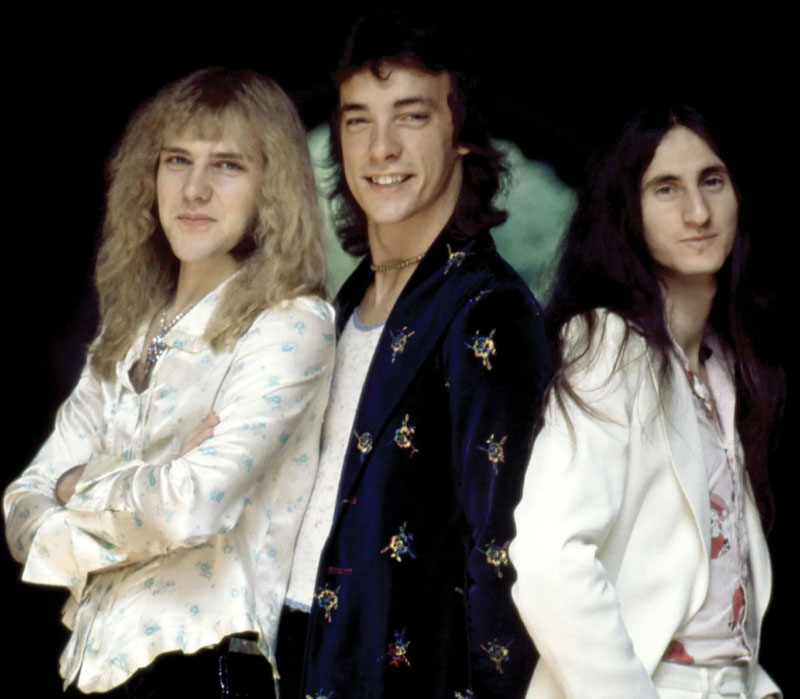
Around 15 or 16 years ago, something strange happened. Rush became cool. Not just cool in the rock world, but cool in the real world, too. Everybody from the Foo Fighters' Dave Grohl and Rage Against The Machine's Tom Morello to Hollywood stars such as Paul Rudd, Jack Black and the guys behind South Park suddenly began shouting about what a brilliant band they were. Rolling Stone - a magazine that had poured more scorn on them than most in the 1970s - stuck them on the cover. Even the cultural gatekeepers at the Rock & Roll Hall Of Fame deigned to unchain their doors and let them in.
"Yeah, we were kind of cynical about it until the induction night," says Lee of the latter. "There were 4,000 people in that room and 3,800 of them were Rush fans. [Then-Rolling Stone editor-in-chief and Hall Of Fame boss] Jann Wenner went up to talk about us. All he said was, 'From Toronto, Canada...', and before he could finish the sentence, the place went fucking nuts. You have to have some kind of hard heart not to be moved by that. We went from being cynical to being grateful and humbled."
Lee leans forward on the sofa and fixes Prog with a stare.
"And I never swallowed razor blades."
THE ROCK & ROLL HALL OF FAME, CLEVELAND, NOVEMBER 2025.
The night before the announcement went out that Rush were reforming, Geddy Lee and Alex Lifeson were being interviewed by Washington Post journalist Geoff Edgers at the Rock & Roll Hall Of Fame in Cleveland.
The crowd that night weren't expecting any big surprises, though the fact that they had been required to sign an NDA might have seemed suspicious to anyone who was paying attention.
"So we were having this chat, and in the middle of it, he asked us, 'So, will you guys ever tour again?' says Lee. "And Alex and I looked at each other and we said, 'Well... we are going out in 2026.' And the crowd laughed. And then they realised we weren't kidding, and they just melted down."
So who was the first musician to tap you up for tickets? Dave Grohl? Jack Black?
"Dave reached out about a week later," says Lee. "He was... effusive."
"[Red Hot Chili Peppers'] Chad Smith... Danny Carey..." says Lifeson with a laugh. "I don't know. There were SO many."
If the news of Rush's return was a fabulous shock, the announcement of who'd be drumming for them was only marginally less surprising. The person tasked with filling Peart's seemingly unfillable shoes is Anika Nilles, best known as a member of Jeff Beck's band.
It was an unexpected choice on the face of it. Nilles is hugely respected in drumming circles, but not widely known outside of it. Today, Lee and Lifeson both insist they didn't consider anyone else - not Danny Carey nor Chad Smith nor Dream Theater's Mike Portnoy or any of the other big names thrown around in conjunction with Rush over the years.
"I love Danny, he'd be a fantastic guy to do this with," says Lee. "Chad Smith is a great pal, and he loves playing with us and we love playing with him. But in my mind, I was looking for someone who didn't have those associations. I wanted someone from a different world.
"And Anika turned out to be perfect. She had the goods. She can really play. Her personality was so easy, she's so great to work with. And she's not afraid of the scrutiny."
"I remember having a conversation with my friend Les," he continues, referring to Les Claypool of Primus, whose own drummer had recently left. "He said, [does a spot-on impression], "Yeah, we have 5,000 people apply for the Primus job.' And when he heard about Anika, he called me and said, 'What? You went for one!"
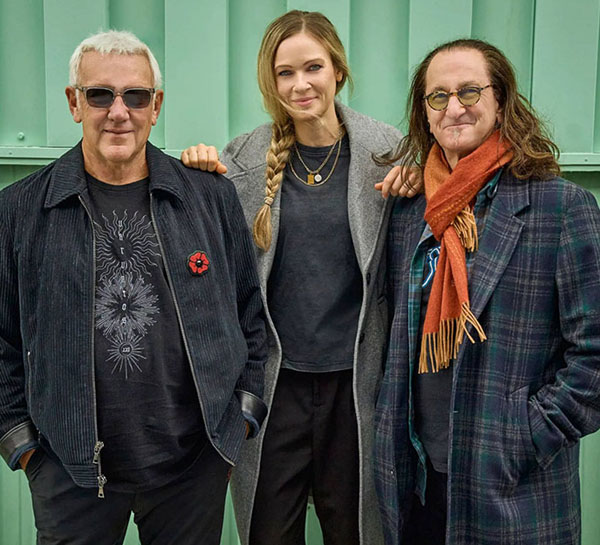
LONDON, JANUARY 2026.
We're talking to Lee and Lifeson in mid-January, 2026. The first part of the biggest comeback tour of the decade doesn't start for another six months. It's unlikely that Rush are going to give much away about their plans, but let's try.
Have you started rehearsing yet?
Lee: "Yes."
How are you feeling about it?
Lee: "Good."
You have said you've been rehearsing 38 songs...
Lee: "It's 39 as of yesterday."
What's the song you've added?
Lee (smiling): "I can't tell you."
What about the other songs?
Lee: "I can't tell you that either."
Are you playing the hits? Throwin in a few curveballs?
Lee: "We're trying to cover as man records as we can and have some variety. We're playing a lot of the songs that people want to hear, but there are some songs that we haven't played in a really long time."
Lifeson: "We're not playing 39 song a night, I can guarantee you that. We won't be playing for more than two hours and 20 minutes. But if you come back the next night, 40% of the songs will be different. And the same the night after that. And the night after that."
Do you see the touring extending beyond this new set of dates you have announced?
Lee: "Don't know."
Do you want it to?
Lee: "Let's see how we're feeling."
Lifeson: "Let's see how our bodies are doing."
Will this lead to new Rush music?
Lee: "Well, we started this off by jamming, so it's possible. But let's see if we can stand each other after a year of this."
Lifeson: "Or if we can still stand [laughs]."
Really, it's a bit late in the day for Geddy Lee and Alex Lifeson to have another falling out. They tried that all those years ago when Lee was kicked out of the band, and look how that turned out.
Instead, those two kids who bonded over a typing class and marijuana have stuck together like glue for 60 years, and the strange little band they built over that time has become something unique and special.
"I can't explain why we mean so much to so many people," says Geddy Lee. "The music is part of it, and the negative press we got galvanised people's love of what we did. Of course, Neil's lyrics speak to a lot of people - they've gone through alienation, they've gone through loss. And we're very honest about what we do. We're not pretending to be anything we're not. We're not putting on makeup and going out onstage in high heels.
"Well..." says Alex Lifeson, inevitably grabbing the last word, "we still might."
The Curious Case Of Roger Kneebend!
(Or How Rush Made Grace Under Pressure...)
The Enemy Within: Dave Everley
In 1984, Rush released Grace Under Pressure, the first of their studio albums not to be produced by Terry Brown. Its tracks saw the trio shift gears and, as with Signals, embrace the new technology of the era, but its creation didn't go without hitch. To celebrate the release of a deluxe box set, featuring Brown's new mix and updated artwork from Hugh Syme, the band revisit the story behind a record that almost didn't get made.
Roger Kneebend is the great lost Rush producer. While the names of Terry Brown, Peter Collins, Rupert Hine and, latterly, Nick Raskulinecz are etched into the band's lore, Kneebend has been all but forgotten. Unsurprising, given both his brief time in the band's orbit and the fact that he was an Action Man-style kids' doll.

This was late 1983 and Rush were, in the words of one of the songs that had appeared on the previous year's Signals album, losing it. The reason for their ails was the struggle to find a producer for their follow-up. After parting company with the talismanic Terry Brown, who had worked on their first nine records, they approached everyone from Steve Lillywhite to Trevor Horn, only for every door to slam in their face. Now the clock was ticking and the pressure was rising. Enter Roger Kneebend.
"We adopted 'Roger Kneebend' as our mascot producer - a 10"-tall action doll [formerly owned by Geddy's son, Julian] replete with flippers and wetsuit," recalled Neil Peart of this unlikely studio guru.
"He was placed prominently atop Alex's tape machine, so he could stay on top of the recording."
In the end, Roger Kneebend stepped aside when the desperate trio finally recruited an actual flesh-and-blood producer in the form of Peter Henderson. But the stresses that had brought them to that point weren't about to abate. In fact they were only going to intensify.
"I remember far too much about that album," says Geddy Lee with a groan. "It was incredibly difficult to make."
The album he's referring to is Grace Under Pressure, whose elegant title carried a multitude of meanings, not least a sizable nod to the strain of its creation. The second album of their 'synth era', it offered a more guitar- heavy corrective to Signals' radical and divisive sonic left-turn, though it was still greeted with suspicion and sometimes hostility by the more dug-in sections of Rush's fanbase, who missed the heavy, side-long sci-fi suites.
More than 40 years on, Grace Under Pressure has transcended the struggles that surrounded it. It features three of the band's all-time-great songs in Red Sector A, Distant Early Warning and Afterimage. Its of-the-moment sound went from modish to dated, but in the anything-goes 2020s it sounds surprisingly fresh once more. And it contains some of Neil Peart's most insightful and emotional lyrics and concepts. Although, the less said about the mullets and shiny jackets that accompanied it the better.
"I don't know what I was thinking," says Geddy Lee of the bouffanted beaver paddle he sported at the time. "Other than it was the 80s."
Rush's march into that bold new decade had begun at the very start of it, with 1980's comparatively compact Permanent Waves. The following year's Moving Pictures had streamlined their sound further, with the Police-inspired, reggae-tinged closing track Vital Signs providing a bridge to 1982's Signals. The latter was barely recognisable as the work of the band that had made 2112 just six years earlier.
"We were listening to so many bands in that period that were doing great stuff: Ultravox, Propaganda, Tears For Fears," says Lee, whose ever-growing collection of "synth toys" included an Oberheim OB-1, OB-Xa and DSX sequencers, plus a PPG Wave 2.2 synth, as used by everyone from Depeche Mode to David Bowie. "We wanted to stretch our music."
While some longtime Rush fans argued that they'd stretched it too far with Signals, the band were determined to stick to this gleaming new path. But they were aware of a painful issue that needed addressing.
"We loved Terry Brown; we still do," says Lee. "He was a real mentor, a real teacher. But we felt like we could predict everything he was going to say before he said it. We were starving for new ideas, new input, new production methods, new ways to work. We weren't gonna get that from Terry."
Signals would be the last album the band made with Brown.
"It was a big decision," says Alex Lifeson. "But we needed to do it."
Rush were confident that they could attract a big-name producer who shared their vision. Two names at the very top of their list were former The Buggles/ Yes frontman Trevor Horn, who had recently worked with Sheffield dandies ABC on their massive Lexicon Of Love album, and Steve Lillywhite, a rising hotshot whose CV included Peter Gabriel's third solo record, XTC's Drums & Wires and U2's first three albums.
The band met with Horn but nothing came of it. Lillywhite was a different matter. He agreed to produce Rush's new album. Not only was he a skilled studio operator, but he would bring a little mainstream legitimacy to the band. It was the perfect union. Or it was until Lillywhite suddenly changed his mind.
"So there we are, we think we have a deal with Steve Lillywhite - and then he bails on us," says Lee, sounding exasperated even now. "We're two or three weeks away from recording, and suddenly we have no producer."
What followed was an increasingly desperate scramble to find a replacement. They cast their net as wide as possible, hoping to pull in someone they could work with.
"So every producer we can think of who is not already booked is flying in to meet us in this little chalet in Northern Ontario that we had hidden away in to write songs," says Lee.
"Oh man, there was so much pressure. It was not good. It caused so many problems in my home life. But I was so obsessed with finding the right producer that it took up all my brain space."
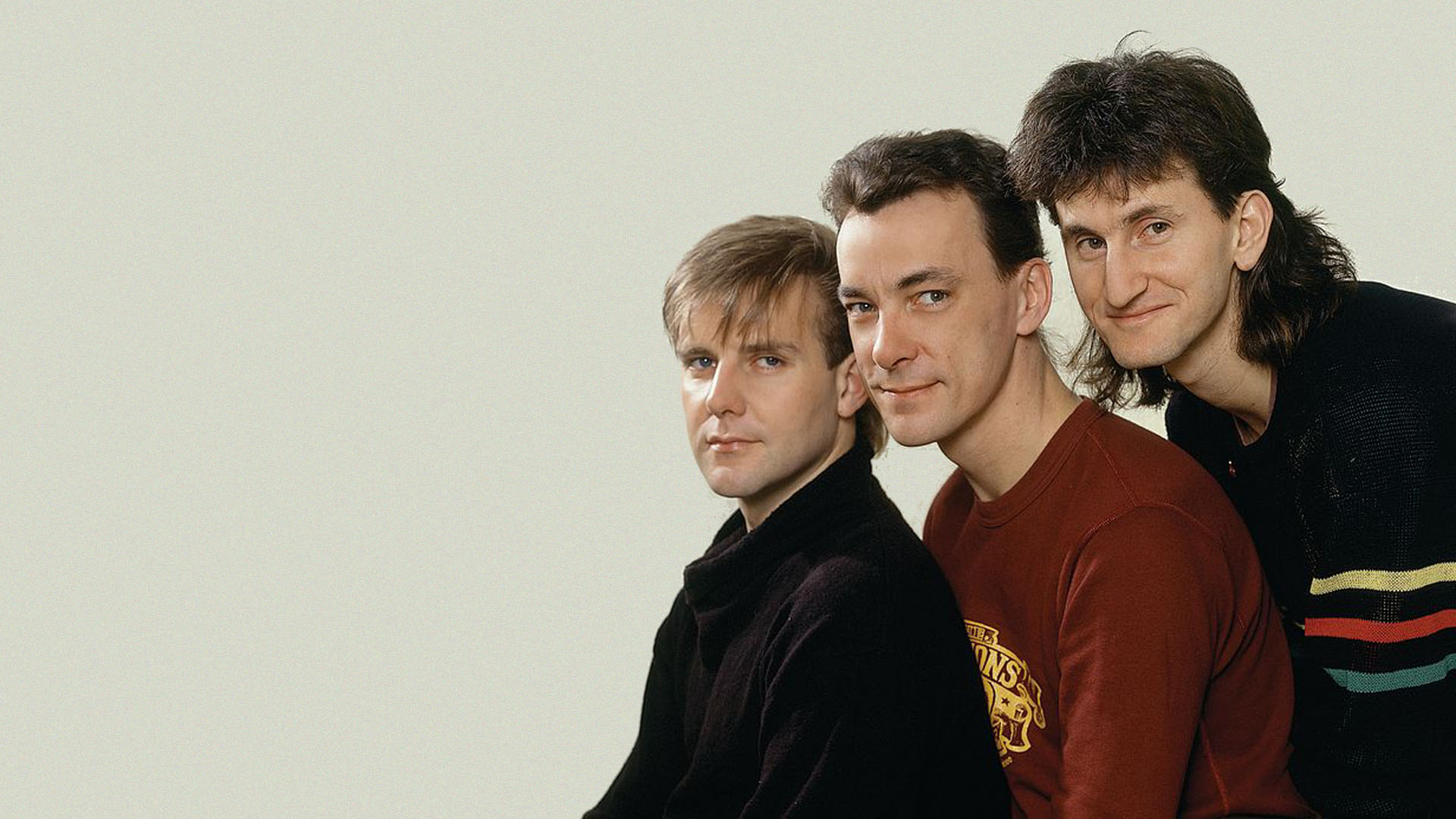
Eventually they found a candidate who seemed to fit the bill. Peter Henderson was a Brit who had learned his craft working with The Beatles' engineer Geoff Emerick. Henderson had engineered albums by Wings, Frank Zappa, Split Enz and more, though his only production credits were on three Supertramp albums, starting with 1979's smash Breakfast In America.
"We wanted a producer that wasn't an engineer, but we couldn't find anybody, so we shifted gears," says Lee. "Then we found Peter Henderson: he did great Supertramp records, Geoff Emerick trained him, he knows what he's fucking doing. And he was a really great engineer. But it turned out that he wasn't really a producer."
Rush hadn't been idle on the songwriting front during their search for a producer. With the 10"-tall Roger Kneebend keeping an eye on them from his vantage point on Alex Lifeson's tape machine, they'd begun amassing music for their 10th album.
Among them were the songs that would define its sound and overarching theme of transcending moments of stress, be they personal, political or societal. Distant Early Warning, the album's eventual opening track, used fears of both nuclear attack and natural collapse as a jumping off point for an exploration of what it means to be human at a time of all-enveloping anxiety.
"It was a time of crisis in the world and I was looking around and seeing my friends unemployed and having a very bad time," explained Peart in 1984. "Inflation was rampant everywhere and people were basically in trouble. The world looked dark. That album to me was a tremendous statement of compassion and empathy with the world."
Red Sector A and Afterimage were no less personal, but in different ways. The former took its title from the VIP section of the Cape Kennedy Space Centre where Rush had witnessed the launch of the very first space shuttle, Columbia, in 1981, but lyrically, it was partly inspired by the experiences of Lee's parents in the concentration camps of Germany in the Second World War.
Afterimage was a eulogy to Robbie Whelan, a young tape operator at Le Studio who had worked on every Rush album since Permanent Waves. He and Peart had become especially close, with Whelan even teaching the drummer how to ski during downtime. Whelan had been killed in a car crash on the way to the studio earlier that year, and his death hit the band hard.
"Afterimage is based on the idea that when someone goes, there are a number of lives they left their mark upon," Peart told Classic Rock in 2012. "When some people go, I feel that kind of wrench. That's why I wrote in that song: 'I try to believe...' But you can't believe in that kind of stuff."
Elsewhere, Rush continued the experimentation they'd begun on Signals. The Enemy Within was propelled by a jagged, reggae-adjacent pulse, Kid Gloves was a purposeful hard rocker with a monumental chorus, while the keyboard fanfares of Between the Wheel provided a nicely uplifting climax. The only misfire was Red Lenses, which proved that some bands just shouldn't try funk.
If the songs were fine, the process of actually getting them on tape wasn't. Work began on Grace Under Pressure in November 1983. Henderson was an amiable guy to be around, but he wasn't the strong hand on the tiller that Rush needed.
"Everything about making that record was like pulling teeth," says Lifeson. "Peter was a great engineer, and the sounds were spectacular, but he wasn't a decisive presence. He could never make a call on the final mix.
We realised that we were kind of producing ourselves."
Their mood wasn't helped by the fact that Quebec was suffering one of the worst winters anyone could remember. When they made Signals at Le Studio, they'd spent their downtime playing volleyball. This time the weather was so bad they rarely ventured outside.
"It was very, very cold for weeks," says Lifeson. "That keeps you indoors and cloistered. It was like The Shining."
In the end, Rush and Henderson wrapped up Grace Under Pressure in March 1984, four months after they started it.
"It took so long to make that record," says Lee. "Much longer than it needed to take. By the time it was finished, we were drained."
Grace Under Pressure was released on April 12, 1984. It was housed in a striking sleeve by regular cover artist Hugh Syme, packed with Easter eggs relating to the album's overarching concept. Like Signals before it, Grace Under Pressure reached the US Top 10 and UK Top 5. Importantly for the fans whose noses had been put out of joint by the previous album's shiny surfaces, Alex Lifeson was more prominent this time.
"Al's guitar has more presence than it did on Signals," says Lee. "It plays a larger role, which is something we really wanted to establish - that keyboard-guitar interplay."
A new box set released in March underlines what a great and oddly underappreciated album Grace Under Pressure is. The combination of electronics with Lifeson's brittle, shapeshifting guitar gives it a crystalline quality that no other Rush album possesses. Ironically, the set includes a brand-new mix of the album by Terry Brown, the producer who Rush parted company with just before they started work on it, ushering in one of the most stressful periods of their career.
"Terry actually called us up and said he wanted to remix Grace Under Pressure," says Lifeson. "He hasn't changed it radically, but it just sounds bigger. But that's testament to Peter Henderson. He recorded those tracks really well."
"I liked that album at the time and I like it now," says Lee. "I'd just never want to go through making it again."